If you're evaluating a fiber laser cutting machine for brass, the short answer is: most shops cutting brass today are well served by a machine in the 1,000W-6,000W range running nitrogen assist gas, with the exact power tier set by your typical thickness and monthly volume -- this page walks through every power tier, real cost drivers, buying-guide checklist, and shop-size configuration so you can size that decision yourself before talking to us.

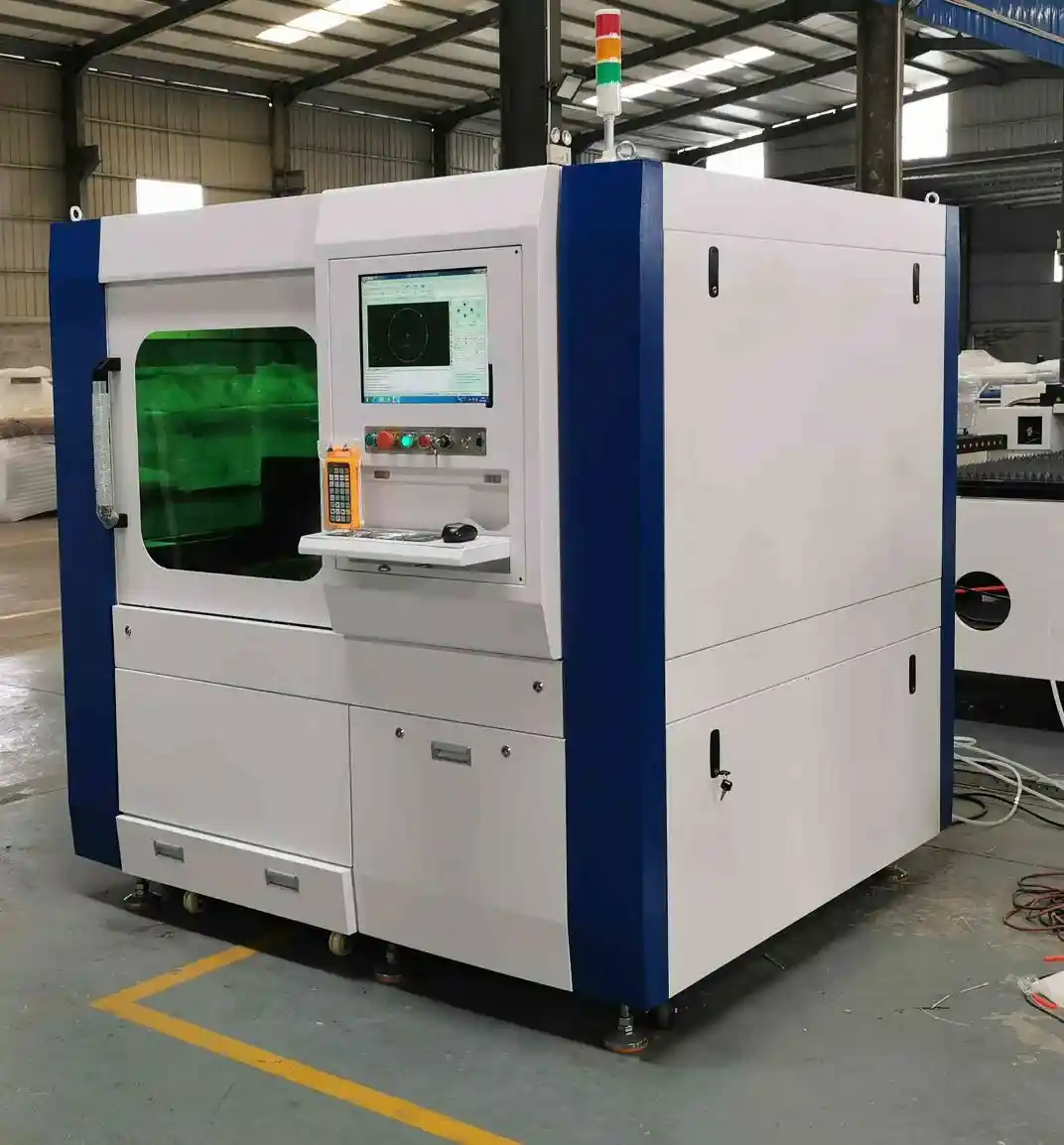
DF Series Fiber Laser Cutting Machine (DF2040) -- one of the configurations covered below for brass.
brass shares copper's high reflectivity, though somewhat reduced by its zinc content, so it cuts more predictably than pure copper while still needing the same fiber-laser wavelength advantage. We've grouped everything PCL Group customers actually ask us about cutting brass onto this one page -- power sizing, thickness capacity, cost, and which machine configuration fits a given shop -- rather than splitting it across a dozen thin pages, so you can see the whole picture at once.
Power Tiers for Cutting Brass: 500W to 30000W
The table below lines up every power tier we build against brass, and which of our machine lines actually covers it. Where we publish an exact thickness range for brass at that power, it's listed directly; where a configuration is more build-to-order (our larger LF and GF platforms scale well beyond a single published spec sheet), we say so honestly rather than inventing a number.
| Power | Recommended Machine | Brass Thickness Capacity |
|---|---|---|
| 500W | SF Series Small Precision Fiber Laser Cutting Machine | Send your job specs -- we'll confirm exact capacity |
| 750W | SF Series Small Precision Fiber Laser Cutting Machine | Send your job specs -- we'll confirm exact capacity |
| 1000W | DF Series Fiber Laser Cutting Machine (DF2040) | 1-3mm |
| 1500W | DF Series Fiber Laser Cutting Machine (DF2040) | 1-3mm |
| 2000W | DF Series Fiber Laser Cutting Machine (DF2040) | 1-5mm |
| 3000W | DF Series Fiber Laser Cutting Machine (DF2040) | 1-6mm |
| 4000W | LF Series Industrial CNC Laser Cutter | Up to 10mm (max) |
| 6000W | LF Series Industrial CNC Laser Cutter | Up to 12mm (max) |
| 8000W | LF Series Industrial CNC Laser Cutter | Up to 15mm (max) |
| 10000W | LF Series Industrial CNC Laser Cutter | Up to 18mm (max) |
| 12000W | LF Series Industrial CNC Laser Cutter | Up to 20mm (max) |
| 15000W | GF Series Large-Format Gantry Fiber Laser Cutting Machine | Up to 30mm (max) |
| 20000W | GF Series Large-Format Gantry Fiber Laser Cutting Machine | Up to 40mm (max) |
| 30000W | GF Series Large-Format Gantry Fiber Laser Cutting Machine | Up to 50mm (max) |
Figures are the manufacturer's published specifications for the referenced machine. Actual results vary with material grade, sheet flatness, and gas purity.
Figures marked "max" are the maximum thickness that's physically cuttable at that power -- not necessarily the thickness you'd actually want to run in production. For a practical, cost-effective thickness at good speed and edge quality, send us your job specs and we'll confirm it directly.
How Thick a Brass Sheet Can a Fiber Laser Cut?
On our DF Series -- the machine line with the most published per-material thickness data -- brass cutting capacity scales like this as power increases:
| Power | Brass Thickness Range |
|---|---|
| 1000W | 1-3mm |
| 1500W | 1-3mm |
| 2000W | 1-5mm |
| 3000W | 1-6mm |
Above 3000W, our LF and GF platforms extend well past these ranges on brass, but at that point the exact ceiling depends on the specific configuration ordered rather than a single published number -- send your thickest regular job and we'll confirm fit.
Thickness Quick Reference: 1mm to 30mm Brass
Buyers frequently ask about a specific brass thickness rather than a power tier -- here's the minimum power we'd recommend at common gauges, based on our DF Series' published data:
| Thickness | Minimum Recommended Power | Typical Use |
|---|---|---|
| 1mm | DF Series Fiber Laser Cutting Machine (DF2040) | thin decorative panels, enclosure covers, small brackets |
| 2mm | DF Series Fiber Laser Cutting Machine (DF2040) | light enclosures, signage, small brackets |
| 3mm | DF Series Fiber Laser Cutting Machine (DF2040) | general fabrication brackets and panels |
| 4mm | DF Series Fiber Laser Cutting Machine (DF2040) | structural brackets, machine guards |
| 5mm | DF Series Fiber Laser Cutting Machine (DF2040) | structural brackets, mounting plates |
| 6mm | DF Series Fiber Laser Cutting Machine (DF2040) | medium-duty structural components |
| 8mm | LF/GF class -- confirm configuration | heavier structural plate, machine bases |
| 10mm | LF/GF class -- confirm configuration | heavy structural plate and frames |
| 12mm | LF/GF class -- confirm configuration | heavy machinery components |
| 16mm | LF/GF class -- confirm configuration | thick structural plate, heavy equipment frames |
| 20mm | LF/GF class -- confirm configuration | very thick plate, specialized structural work |
| 25mm | LF/GF class -- confirm configuration | extra-heavy plate -- confirm cutting speed expectations before quoting a job |
| 30mm | LF/GF class -- confirm configuration | extra-heavy plate -- typically an LF/GF-class job, confirm configuration directly |
These are minimums for a clean cut at reasonable speed, not absolute ceilings -- more power cuts the same thickness faster. Confirm your exact cycle-time target with us before finalizing a spec.
Brass: Gas, Grades, and What Actually Matters When Cutting It
Brass is cut with nitrogen assist gas (nitrogen, similar pressure range to copper given brass's related reflectivity profile). brass shares copper's high reflectivity, though somewhat reduced by its zinc content, so it cuts more predictably than pure copper while still needing the same fiber-laser wavelength advantage
| Grade | What It Means for Cutting |
|---|---|
| C260 | cartridge brass, a common grade for decorative hardware and fittings |
| C360 | free-cutting brass, more common in machined parts than laser-cut sheet but occasionally seen in mixed job shops |
A Typical Job
A common real-world case: a musical instrument or specialty fabrication shop cutting thin brass components with fine detail.
A Mistake Worth Avoiding
Thin brass sheet can develop dross at the bottom edge if cutting speed is pushed too aggressively -- brass rewards a slightly more conservative parameter set than steel of the same gauge.
Is Brass Expensive to Cut? What Actually Drives the Cost
We don't publish machine list prices (see the sidebar for why), but the cost of running brass through a fiber laser breaks down into a few concrete drivers you can reason about before ever getting a quote:
- Assist gas. Brass runs on nitrogen -- nitrogen, similar pressure range to copper given brass's related reflectivity profile. Nitrogen and argon cost more per cut than oxygen or compressed air, so materials that require an inert gas carry a higher running cost per part than the machine price alone suggests.
- Cutting speed at your typical thickness. Thicker brass cuts slower, which is a direct labor-and-throughput cost even before material cost is factored in.
- Machine sizing relative to your job mix. like copper, brass is a material where CO2 lasers historically struggled with reflectivity, making fiber laser the practical modern choice
- Nesting efficiency and scrap rate, which matter more on higher-cost materials than on inexpensive ones.
The practical takeaway: don't size a machine purely on sticker price. A machine that's underpowered for your typical brass thickness will cost more per part in cycle time than the difference in purchase price between it and the next tier up.
Best Fiber Laser Cutting Machine for Brass in 2026
For most shops cutting brass, our recommendation for 2026 is the DF Series Fiber Laser Cutting Machine (DF2040). Fast cutting speed with stable, safe operation Imported servo motors and precision guide rails That said, "best" depends on your volume and thickness range more than any single spec sheet -- a high-volume shop running thin brass sheet all day has different priorities than a job shop cutting brass occasionally alongside three other metals, which is why the configuration sections below break it down by shop type rather than naming one machine as universally correct.
How to Choose a Fiber Laser Cutting Machine for Brass
Buyers evaluating a machine for brass tend to focus on power first and everything else second -- power matters, but these five checks catch most of the expensive mistakes we see:
- Power sized to your thickest regular brass job, not your thinnest -- undersizing power is the most common regret we hear from buyers who chose based on price alone.
- Assist gas delivery -- confirm the machine and your shop's gas supply setup both support nitrogen at the pressure your brass thickness needs.
- Worktable size matched to your actual sheet stock, with room in the nesting layout rather than a bed sized to the exact sheet dimension.
- Control software your operators can actually learn quickly -- ask for a demo of the nesting and cutting-parameter interface, not just the spec sheet.
- Warranty and spare-parts availability in your region, especially for source-specific consumables.
Machine Configurations for Every Shop Cutting Brass
The eight variations below are really the same underlying question asked by different shops: "which of PCL Group's lines fits how I'll actually use it?" Rather than one generic answer, here's how each shop type should think about cutting brass:
Desktop & Small-Footprint Configurations
A desktop-format machine trades worktable size and top-end power for a small footprint and lower entry cost -- the right call for brass cutting that's occasional or low-volume rather than a shop's main production line.
This is likely the right fit if: You cut brass occasionally alongside other work, and a full-size gantry machine would sit idle most of the week.
Entry-Level Configurations
An entry-level brass setup usually means our SF Series: enough power and precision for thin-to-medium brass without paying for worktable size or power headroom you won't use.
This is likely the right fit if: This is your shop's first fiber laser and brass is your main job mix, and you'd rather grow into more power later than pay for headroom you can't use yet.
Portable Configurations
"Portable" fiber laser cutting machines are still shop-floor equipment, not handheld tools -- what buyers usually mean is a smaller-footprint machine that's easier to relocate within a facility than a full-size gantry system, which again points to our SF or lower-power DF configurations for brass.
This is likely the right fit if: You need to move a brass-capable machine between work areas or a leased space rather than dedicating permanent floor space to it.
Small-Business Configurations
For a small shop adding brass laser cutting as a new capability rather than replacing an existing production line, the SF Series or a lower-power DF configuration keeps the upfront investment proportional to expected volume.
This is likely the right fit if: You're adding brass cutting as a new service line rather than replacing an existing production process.
High-Precision Configurations
When brass parts need tight tolerance and minimal kerf -- fine detail work, thin gauge, small radii -- our SF Series' ±0.01mm repositioning accuracy is built for exactly that, at the cost of the larger worktable and thickness headroom of our other lines.
This is likely the right fit if: Your brass parts get rejected for tolerance or edge-quality reasons more often than for being late.
Industrial Configurations
An industrial brass cutting line usually means the LF Series: higher power, a heavy-duty welded and tempered bed, and a control system built for multi-shift production rather than occasional use.
This is likely the right fit if: You're running brass across multiple shifts and downtime has a direct, measurable cost.
Heavy-Duty Configurations
Heavy-duty brass work -- thicker plate, higher duty cycle, less tolerance for downtime -- is where the LF Series' plate-welded, tempered bed and higher power ceiling earn their keep over a lighter-duty machine.
This is likely the right fit if: Your typical brass job is thicker plate, not thin sheet, and cycle time on that thickness drives your quoting.
Buying Second-Hand
We understand the appeal of a used machine on price, but a second-hand fiber laser cutting machine for brass comes with real risk: no manufacturer warranty, unknown maintenance history on the laser source and optics, and often no local parts support. If budget is the driver, a new SF or entry-tier DF configuration is frequently close enough in price to a well-maintained used machine to make the new machine the safer choice -- worth running the numbers on both before deciding.
This is likely the right fit if: Budget is the primary constraint on your brass project, and you're weighing a used machine purely on sticker price.
Who Actually Buys a Fiber Laser Cutting Machine for Brass
The shops we hear from most about brass cutting cluster into a handful of industries -- if you recognize your own shop below, the buying considerations that industry usually cares about most are noted alongside it:
- Hardware Manufacturing -- high-mix, often high-volume production of brackets, fittings, and fasteners-adjacent parts across several metals, typically running brass as a core part of their material mix.
- Architectural Fabrication
None of this means a machine sized for brass only works in these industries -- it's simply where the volume tends to concentrate, which is useful context when you're deciding how much automation and throughput to size into an order.
Fiber Laser vs. Other Ways to Cut Brass
Like copper, brass is a material where co2 lasers historically struggled with reflectivity, making fiber laser the practical modern choice. For a full side-by-side on plasma or waterjet specifically, see our dedicated comparison pages -- this page focuses on fiber laser sizing and configuration for brass.
Total Cost of Ownership
The invoice price is only the first number that matters when budgeting for brass cutting. Over a typical 3-5 year service life, nitrogen assist gas consumption, electricity, and wear parts (nozzles, protective lenses, and eventually the cutting head) add up to a running cost that often rivals the purchase price itself. On brass specifically, that cost scales with how close to the machine's rated thickness ceiling you're running day to day -- comfortably inside the range costs less per part than routinely pushing the top of it.
Nesting efficiency matters more on higher-value brass stock than on inexpensive scrap-tolerant metals -- software that minimizes offcuts pays for itself faster the more the raw material costs per sheet.
Software, Operator Training, and Installation
The control system is where operators spend most of their actual working time, more than at the laser source itself. Our machines use nesting and cutting-parameter software built for shop-floor use, which shortens the learning curve for new operators programming brass jobs and reduces per-job setup time once the team is trained.
Installation and operator training are included with every order, and we keep spare parts (nozzles, lenses, and source-specific components) in stock for faster turnaround than sourcing them after the fact once a machine cutting brass is already running production.
Warranty, Documentation, and Why These Numbers Are Accountable
PCL Group manufactures and exports its own line-up of fiber laser cutting machines rather than reselling a third party's design under our own name -- which is why the specifications referenced throughout this page for brass cutting are numbers we stand behind directly, not marketing copy passed along from an upstream factory we don't control. Every machine ships with maintenance schedules and part specifications in writing, and is built to CE safety standards for export.
Export, Shipping, and Lead Time
PCL Group ships fiber laser cutting machines for brass and other materials to buyers worldwide. Lead time depends on configuration and current factory schedule, and typically runs longer than a stocked domestic machine because each order is built and tested against your specific power, worktable, and automation requirements rather than pulled off a shelf.
Import duties and inbound freight vary by destination country and aren't something we can quote generically -- they're part of the total landed cost conversation we walk through once you send an inquiry, alongside the brass-specific configuration itself.
Common Concerns Before Ordering
Buyers sometimes worry that after-sales support disappears once a machine has shipped from overseas. For brass cutting specifically, our engineering team stays reachable directly for technical questions well after installation, and we keep spare parts stocked because we know that gap is where overseas purchases most often go wrong for other buyers.
After an initial inquiry about brass cutting, expect a short back-and-forth to confirm your material grade, thickness, and monthly volume, followed by a written quote for a specific configuration -- not a generic price list. Production begins once terms are confirmed, with lead time depending on configuration and current factory schedule.
Frequently Asked Questions
What's the best fiber laser cutting machine for brass in 2026?
For most shops cutting brass, the DF Series Fiber Laser Cutting Machine (DF2040) -- send your thickness and volume for brass and we'll confirm the exact configuration.
How thick a brass sheet can a fiber laser cut?
It depends on power tier -- see the brass power-tier table above for our published ranges, and contact us for brass jobs beyond our DF Series' published data.
Is fiber laser cutting brass expensive?
The machine price is only part of it for brass -- nitrogen assist gas consumption and cutting speed at your typical brass thickness both affect running cost more than most buyers expect.
Can I get a desktop or small-footprint fiber laser for brass?
Yes -- our SF Series is built for exactly that on brass: lower power, smaller footprint, and precision suited to thin-to-medium brass gauge work.
Should I buy a second-hand fiber laser cutting machine for brass?
We'd urge caution on a used machine for brass work -- no manufacturer warranty and unknown source/optics history are real risks; a new entry-tier configuration is often close enough in price on brass jobs to make new the safer choice.
How do I choose the right fiber laser cutting machine for brass?
Start with your thickest regular brass job (not your thinnest), confirm nitrogen assist gas delivery, and size the worktable to your actual brass sheet stock -- see the buying-guide checklist above for the full list.
What's the difference between the SF and DF Series for cutting brass?
The SF Series is built for thin-to-medium brass with tighter precision and a smaller footprint; the DF Series covers a wider brass thickness range at higher power for general production. Send your typical thickness and we'll confirm which fits.
Do you offer a warranty and local spare parts support for brass machines?
Yes -- every machine we ship for brass cutting comes with a manufacturer warranty and documented maintenance schedules, and we stock spare parts (nozzles, lenses, source-specific components) rather than sourcing them after the fact.
How long does installation and operator training take for a brass setup?
This depends on configuration and site readiness -- installation guidance and operator training for brass jobs are included with every order, and we'll give you a specific timeline as part of your quote.


