Handheld Fiber Laser Welding System
Revolutionizing Metal Joining with 10X Speed and Superior Weld Aesthetics compared to Traditional TIG/MIG.
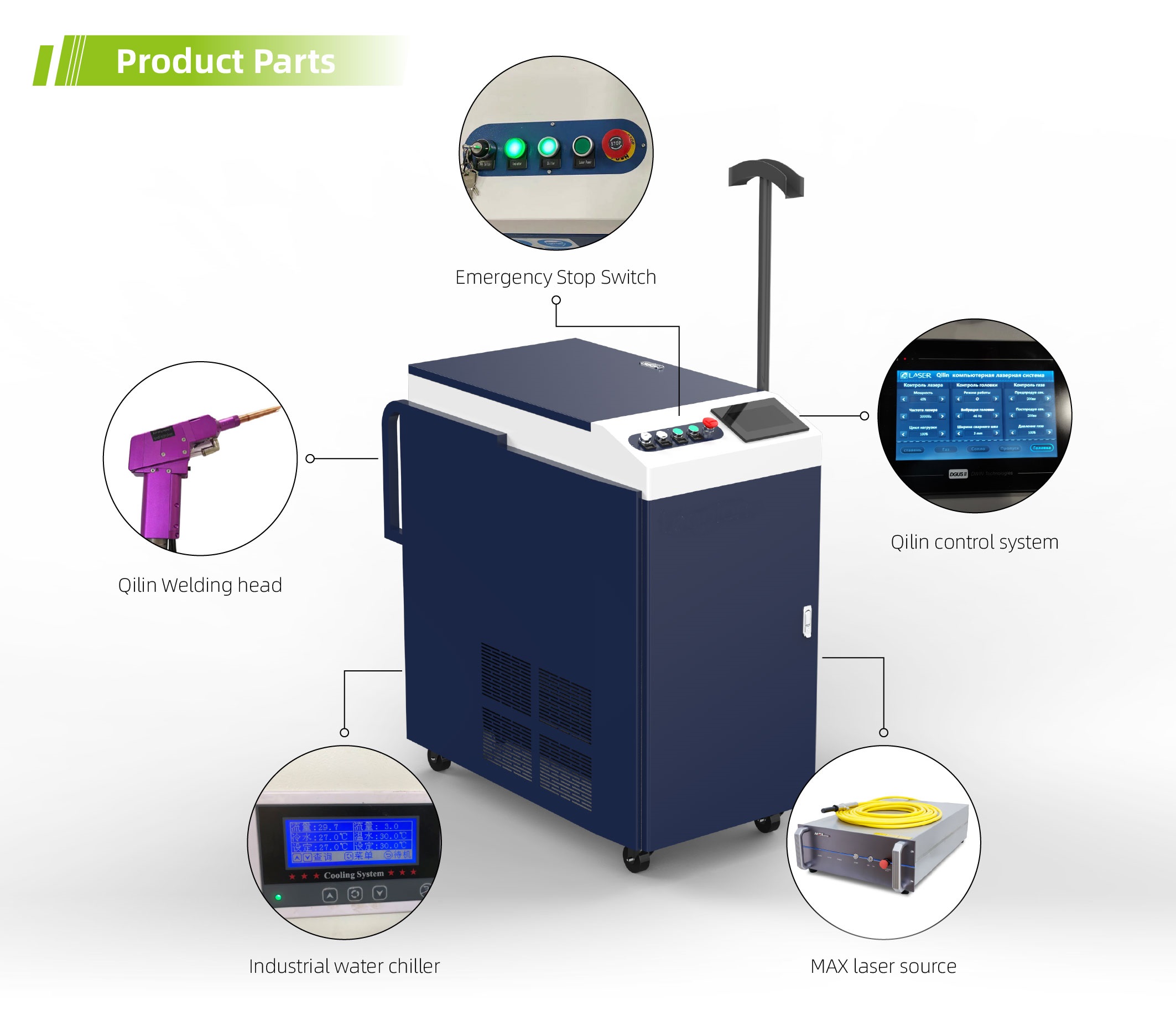
A New Era in Welding Efficiency
The Handheld Fiber Laser Welding Machine is the most significant technological leap in the metal fabrication industry in the last decade. Historically, achieving high-quality welds in stainless steel or aluminum required years of master-level training in TIG (Tungsten Inert Gas) welding. PCL GROUP’s laser welding system changes this dynamic entirely, allowing even novice operators to produce professional-grade welds with minimal training.
By utilizing a concentrated fiber laser beam as the heat source, the machine creates a high-energy density welding pool. This results in an extremely narrow Heat Affected Zone (HAZ), which is critical for preventing material warping and discoloration in thin-walled components. Whether you are working on kitchenware, advertising signage, or complex medical equipment, the laser welder provides a seamless, consistent bead that often requires no secondary grinding or polishing.
Live Operational Performance
Core Technological Advantages
- Wobble Welding Technology: Our specialized welding head supports adjustable "wobble" widths (0-5mm), compensating for uneven joint gaps and significantly increasing weld strength.
- Versatile Material Joining: Effortlessly weld stainless steel, carbon steel, galvanized sheet, aluminum, and even brass with specialized parameters.
- Integrated Wire Feeder: Automatic wire feeding system supports 0.8mm to 1.6mm wires, perfect for structural joints and filling larger gaps.
- 3-in-1 Functionality: Many of our models now support welding, cutting, and cleaning (rust removal) simply by switching the nozzle and software mode.
Safety & Industrial Reliability
Productivity is nothing without safety. PCL GROUP's laser welders are equipped with a multi-layered safety interlocking system. The laser will only fire when the copper nozzle is in contact with the workpiece (