A common misconception in metal fabrication shops is that any fiber laser cutting machine will do, and the material and part mix don't change the buying decision much. In practice, carbon steel cutting behavior -- and the part geometry metal fabrication shops typically runs -- narrows the real options considerably. Metal Fabrication Shops work is contract fabricators quoting a wide mix of customer parts, where cutting speed and material flexibility directly affect how many jobs a shop can take on, and that shapes which fiber laser configuration actually makes sense more than any single spec on a data sheet.

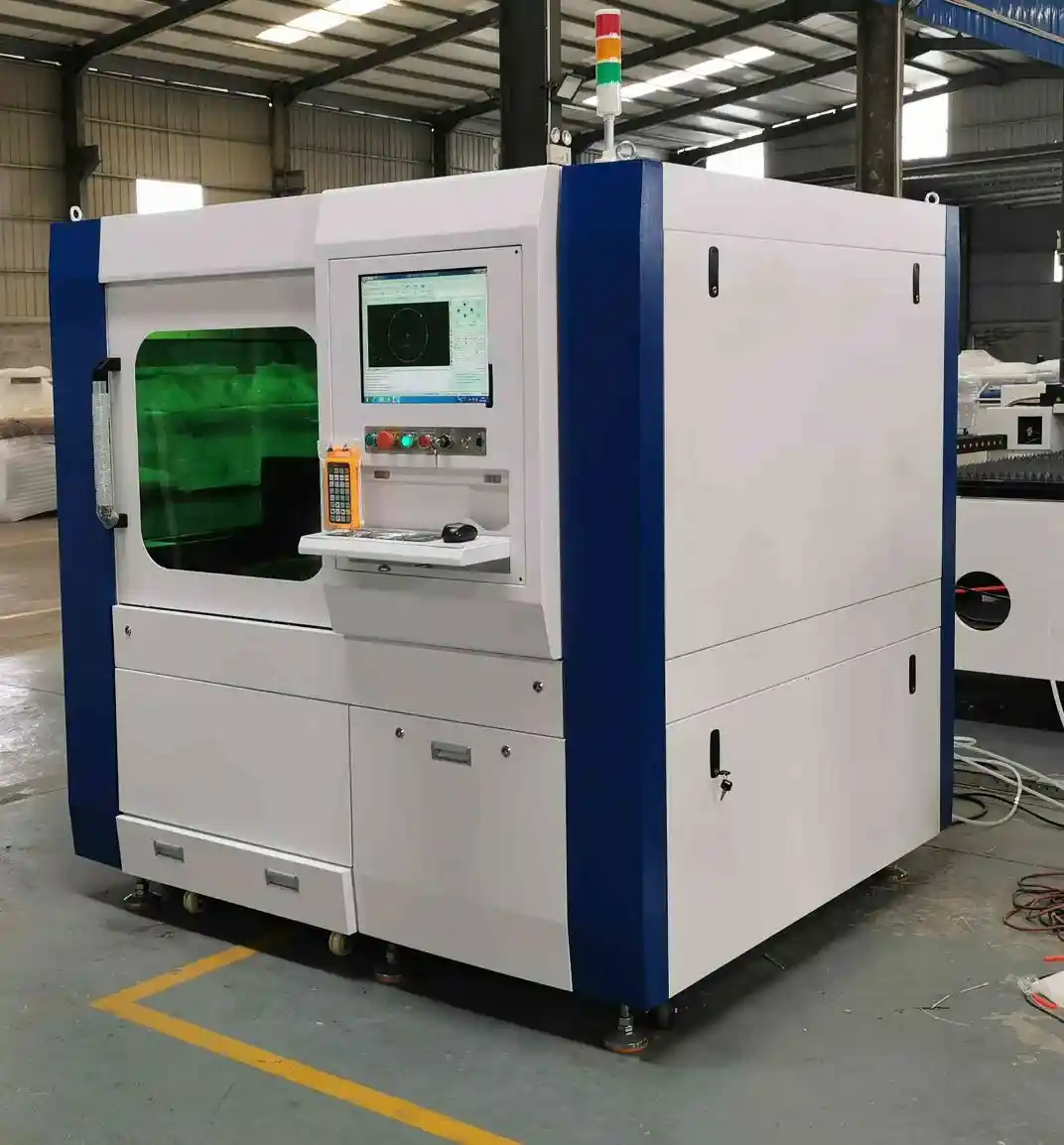
LF Series Industrial CNC Laser Cutter -- one of the configurations covered below for metal fabrication shops.
This page covers what actually differs for metal fabrication shops: typical material and thickness, running-cost drivers specific to this work, how the job looks from the operator's chair versus the engineer's or the buyer's side of the table, and which PCL Group configuration fits which shop size.
Metal Fabrication Shops: What Each Power Tier Actually Cuts
Rather than a generic thickness chart, here's what a metal fabrication shops shop typically runs at each power tier, alongside the published carbon steel thickness capacity for reference:
| Power | Machine | Typical Metal Fabrication Shops Job | Carbon Steel Capacity |
|---|---|---|---|
| 500W | SF Series Small Precision Fiber Laser Cutting Machine | thin-gauge brackets, sign blanks, and prototype parts under roughly 3mm | send your job specs -- we'll confirm |
| 750W | SF Series Small Precision Fiber Laser Cutting Machine | light structural brackets and enclosure panels up to about 4-5mm | send your job specs -- we'll confirm |
| 1000W | DF Series Fiber Laser Cutting Machine (DF2040) | everyday job-shop brackets and plate up to roughly 6-8mm carbon steel | 0.8-10mm |
| 1500W | DF Series Fiber Laser Cutting Machine (DF2040) | mid-thickness structural brackets and frame components up to about 10-12mm | 1-16mm |
| 2000W | DF Series Fiber Laser Cutting Machine (DF2040) | heavier plate work -- machine bases, thicker brackets -- up to roughly 14-16mm | 1-20mm |
| 3000W | DF Series Fiber Laser Cutting Machine (DF2040) | the top of most general fab shops' regular thickness range, comfortably into 18-20mm carbon steel | 1-22mm |
Job descriptions reflect what we most commonly see ordered at each tier for this industry, not a hard ceiling -- a heavier or lighter job mix shifts the right tier up or down.
Carbon Steel Thickness in Metal Fabrication Shops: What's Typical
Most metal fabrication shops parts we see run in a thickness range where a 2000W configuration covers carbon steel at 1-20mm -- lighter or heavier jobs shift that tier up or down, which is why we size to your thickest regular part, not an average.
For the complete carbon steel power-and-thickness breakdown (500W to 30,000W, every tier we build), see our dedicated fiber laser cutting machine for carbon steel guide -- this page focuses on what's specific to metal fabrication shops rather than repeating that full chart.
Running Cost in Metal Fabrication Shops: Power, Labor, and Fume Extraction
Power Draw & Electricity Cost
Idle time still costs money in metal fabrication shops: a machine sitting between jobs with its chiller and cabinet electronics running draws power without cutting anything. Shops that batch nesting to keep the head cutting rather than waiting on operator load/unload see a real difference in electricity cost per finished part, independent of which power tier they bought.
Labor
One real, published number worth citing for metal fabrication shops: our tube and coil-fed lines document nesting software that cuts material waste by roughly 20% versus manual layout. That's a material-cost figure first, but for metal fabrication shops work it's also a labor figure indirectly -- less time spent re-nesting a job by hand to fight scrap rate.
Three Perspectives on Cutting Carbon Steel for Metal Fabrication Shops
A machine purchase for metal fabrication shops gets evaluated differently depending on who in the shop is looking at it -- here's the same decision from three real vantage points:
fume, noise, and heat at the workstation are daily-life concerns, not abstract specs -- a clean assist-gas setup and proper extraction on metal fabrication shops jobs is the difference between a comfortable shift and one where the exhaust fan is fighting a losing battle.
cycle-time math has to account for piercing overhead, not just linear cutting speed, when quoting a metal fabrication shops nest with a lot of small features -- treating a spec sheet's "cutting speed" number as the whole story undersells actual job time.
ROI on a new machine for metal fabrication shops work is a real calculation, not a sales pitch -- it's current outsourcing or subcontract cutting cost, per-part cycle time on the new machine, and how much volume you can actually commit to it, and we'd rather walk through that math honestly than promise a payback period we can't back up.
None of these views is more "correct" than the others -- a configuration that only satisfies one of them (say, the lowest sticker price with none of the operator's or engineer's concerns addressed) tends to become an expensive mistake within the first year of metal fabrication shops production.
Real Jobs, and Mistakes Worth Avoiding
A Typical Job
A common real-world case in metal fabrication shops: a machinery builder cutting enclosure panels and mounting brackets where hole tolerance for bolted assembly matters more than surface finish.
A Mistake Worth Avoiding
For metal fabrication shops work specifically: on plate over roughly 16-20mm, cutting speed drops sharply, so job costing needs to account for that rather than assuming a linear scale-up from thin-gauge cut times.
Signs a Fiber Laser Actually Fits Your Metal Fabrication Shops Shop
Not every metal fabrication shops shop needs the same configuration -- these are the real signals we listen for on an inquiry call:
- You quote a wide mix of customer parts and materials on short notice.
- Machine idle time between jobs is a direct cost to your shop, not a rounding error.
- You need one machine to switch between steel, stainless, and aluminum without a hardware change.
Configuration by Shop Size: Metal Fabrication Shops
The same underlying question comes up regardless of shop size: which configuration actually matches how a metal fabrication shops shop will use it, day to day. Three common starting points:
Job-Shop / Entry Configuration
A shop cutting metal fabrication shops parts as one line among several jobs, rather than as dedicated production, is usually better served starting with an SF-class machine -- enough precision and power for typical carbon steel gauge without paying for worktable size or automation a low-volume line won't use.
Production / Multi-Shift Configuration
Once metal fabrication shops work is running across multiple shifts with real downtime cost, the LF Series' heavier-duty bed and higher power ceiling earn their keep over a lighter machine sized for occasional use.
High-Precision Configuration
Where metal fabrication shops parts get rejected for tolerance or edge-quality reasons more than for being late, our SF Series' tighter repositioning accuracy is built for exactly that trade-off against raw throughput.
How to Choose a Fiber Laser Cutting Machine for Metal Fabrication Shops
Buyers in metal fabrication shops tend to focus on power first -- power matters, but these five checks catch most of the expensive mistakes we see on this specific type of order:
- Size power to your thickest regular metal fabrication shops part, not your thinnest -- the most common expensive mistake we see.
- Confirm assist gas delivery for carbon steel at the pressure your typical thickness needs.
- Match worktable size to your actual stock, with nesting room rather than a bed sized to the exact sheet.
- Ask for a software demo, not just a spec sheet -- your operators will live in the nesting/cutting interface daily.
- Check regional warranty and spare-parts support before ordering, especially for source-specific consumables.
Fiber Laser vs. Plasma vs. Waterjet for Metal Fabrication Shops
All three processes show up somewhere in metal fabrication shops, and the honest comparison depends on thickness and finish requirements more than any single "best" answer:
| Factor | Fiber Laser | Plasma | Waterjet |
|---|---|---|---|
| Edge quality | Best of the three -- near weld-ready, minimal secondary finishing | Rougher, usually needs grinding before welding | Very clean, but slower and adds moisture to the cut zone |
| Typical thickness sweet spot | Thin to medium gauge, extending further with higher power | Thick plate at the lowest cost per cut | Any thickness, but throughput drops as it increases |
| Heat-affected zone | Narrow | Wider -- can matter for parts that get welded or heat-treated after | None -- a cold cutting process |
| Running cost driver | Assist gas + electricity, scales with speed | Consumable electrodes/nozzles, generally cheaper per cut on thick plate | Abrasive garnet consumption, generally the most expensive per cut |
For carbon steel specifically at the thickness most metal fabrication shops shops run, fiber laser wins on speed and edge quality; plasma remains a reasonable choice purely on cost for very thick plate, and waterjet is worth considering only where zero heat input is a hard requirement.
Fiber Laser vs. What Most Metal Fabrication Shops Shops Ran Before
Shops moving metal fabrication shops work onto a fiber laser are usually replacing plasma, oxy-fuel, or a manual cutting process, and the switch is rarely just about speed -- the edge quality difference is what actually changes downstream work in metal fabrication shops, since a cleaner cut on carbon steel means less grinding or deburring before the part moves to its next step. See the full process comparison table above for the general tradeoffs across fiber laser, plasma, and waterjet.
To be equally honest about the other direction: fiber laser is not automatically the right call for every metal fabrication shops job. Very thick plate at the extreme end of a job mix, parts that genuinely can't tolerate any heat input, or volumes too low to justify any dedicated cutting equipment are all cases where a different process -- or subcontracting the occasional outlier job -- can beat owning a machine sized for your rare, not your typical, part.
Beyond Carbon Steel: Other Materials Metal Fabrication Shops Shops Run
Metal Fabrication Shops work rarely means a single material all day -- shops in this space commonly also run Mild Steel and Sheet Metal, each with its own assist gas and cutting-parameter requirements. If your job mix spans more than one of these, size your machine and gas delivery to the hardest material in the mix, not the easiest.
Automation and Downstream Processes in Metal Fabrication Shops
Cutting is one step in a longer metal fabrication shops workflow, not the whole job. Many shops in this space also run a 6-axis welding robot system downstream of the laser -- holds a constant torch angle and travel speed through complex 3d weld paths -- which is worth planning for when you're laying out floor space and staffing around a new cutting machine, not treating as a separate purchase decision made later.
The practical link for metal fabrication shops: a cleaner, more consistent carbon steel cut edge coming off the laser directly reduces the fit-up and rework time on whatever comes next on a metal fabrication shops floor, whether that's welding, bending, or assembly -- part of why the cut-quality numbers earlier on this page matter beyond the cutting step itself.
Total Cost of Ownership
The purchase price is only the first number that matters when budgeting fiber laser cutting for metal fabrication shops. Over a typical 3-5 year service life, oxygen consumption, electricity, and wear parts (nozzles, protective lenses, and eventually the cutting head) add up to a running cost that often rivals the purchase price itself -- and on carbon steel specifically, that cost scales with how close to the machine's rated thickness ceiling you run day to day.
Nesting efficiency matters more the higher carbon steel stock costs per sheet -- software that minimizes offcuts pays for itself faster on higher-value material than on inexpensive, scrap-tolerant metal, which is worth factoring into the metal fabrication shops cost picture alongside the running-cost drivers above.
Software, Support, and Export
Operators programming metal fabrication shops jobs spend more working time in the control software's nesting and cutting-parameter interface than at the laser source itself -- our machines run nesting software built for shop-floor use, which shortens the learning curve on new carbon steel jobs. Installation guidance and operator training are included with every order.
PCL Group manufactures and exports this equipment directly rather than reselling another factory's design, and ships to metal fabrication shops buyers worldwide. Lead time depends on configuration and current factory schedule -- each machine is built and tested against your specific requirements rather than pulled off a shelf -- and we keep spare parts (nozzles, lenses, source-specific components) in stock rather than sourcing them after a machine cutting carbon steel is already running.
Common Concerns Before Ordering
Buyers in metal fabrication shops sometimes worry that after-sales support disappears once a machine ships from overseas. Our engineering team stays reachable directly for technical questions well after installation, and we keep spare parts stocked for carbon steel-relevant consumables because we know that gap is where overseas purchases most often go wrong for other buyers.
After an initial inquiry about metal fabrication shops work, expect a short back-and-forth to confirm your material, thickness, and monthly volume, followed by a written quote for a specific configuration -- not a generic price list. Production begins once terms are confirmed, with lead time depending on configuration and current factory schedule.

6-Axis Welding Robot System -- some metal fabrication shops shops run this downstream of cutting.
Cutting is rarely the last step in metal fabrication shops: holds a constant torch angle and travel speed through complex 3d weld paths
Frequently Asked Questions
What's the best fiber laser cutting machine for metal fabrication shops?
It depends on your typical carbon steel thickness and volume -- for most metal fabrication shops shops we start the conversation around the LF Series Industrial CNC Laser Cutter, then adjust power and worktable size from there.
How much does running cost matter for metal fabrication shops compared to the machine price?
For metal fabrication shops work, more than most buyers expect -- assist gas (oxygen for carbon steel), electricity, and downstream labor (grinding, deburring) all add up over the machine's service life on a metal fabrication shops floor. See the running-cost section above for specifics.
Do I need special fume extraction for metal fabrication shops?
For metal fabrication shops specifically, it depends on the material in your job mix, not the industry name -- we size fume extraction to whichever material you run needs the most, and will tell metal fabrication shops buyers honestly if that means an upgrade from what they currently run.
How many operators does a fiber laser cutting machine need for metal fabrication shops work?
We don't publish a fixed staffing number for metal fabrication shops because it depends on your loading, unloading, and finishing workflow -- ask us to walk through your specific metal fabrication shops process and we'll give you a realistic answer, not a generic one.
Can one machine handle the full range of parts a metal fabrication shops shop typically runs?
For most metal fabrication shops shops, often yes within one material's thickness range, but a job mix that spans several metals or a wide thickness range may point to a different configuration than a single-material metal fabrication shops operation -- send us your actual part mix and we'll confirm.
What's the lead time for a fiber laser cutting machine ordered for metal fabrication shops?
For a metal fabrication shops order, lead time depends on configuration and current factory schedule, since each machine is built and tested against your specific requirements rather than shipped off a shelf -- we'll give you a specific timeline as part of your metal fabrication shops quote.
Should a small metal fabrication shops shop start with a smaller machine and upgrade later?
For a smaller metal fabrication shops operation, often yes -- if your carbon steel volume today doesn't justify a full production-scale machine, an entry-tier configuration sized to your current thickest metal fabrication shops job is usually the safer financial choice over stretching the budget for headroom you may not use for another year or two.
Do you offer installation and operator training for metal fabrication shops customers?
Yes -- for every metal fabrication shops order, installation guidance and operator training on the nesting and cutting-parameter software are included regardless of which configuration you choose.
What assist gas does carbon steel cutting use in metal fabrication shops applications?
In metal fabrication shops work, oxygen is the standard choice for carbon steel -- oxygen reacts exothermically with the hot steel, adding extra cutting energy on top of the laser -- this is what lets fiber lasers punch through thick carbon steel plate faster than they could on inert gas alone.
What's the difference between a 1000W and a 3000W fiber laser for metal fabrication shops?
For metal fabrication shops work, the difference is mainly thickness ceiling and cutting speed on carbon steel -- see the power-tier table above for what we typically see ordered at each tier for metal fabrication shops specifically, rather than assuming a generic doubling of capability per tier.
Do metal fabrication shops shops usually need automation beyond the cutting machine itself?
For metal fabrication shops specifically, often yes, downstream of the cut rather than at the laser itself -- see the automation and downstream processes section above for what we commonly see paired with fiber laser cutting in this industry.