Waterjet comes up most often from buyers who've been burned by heat distortion or discoloration on a laser- or plasma-cut part, and want to know whether a cold cutting process solves that for good. It's worth saying plainly up front: PCL Group manufactures fiber laser cutting machines, not waterjet systems -- so what follows is an honest engineering comparison, not a pitch dressed up as one.

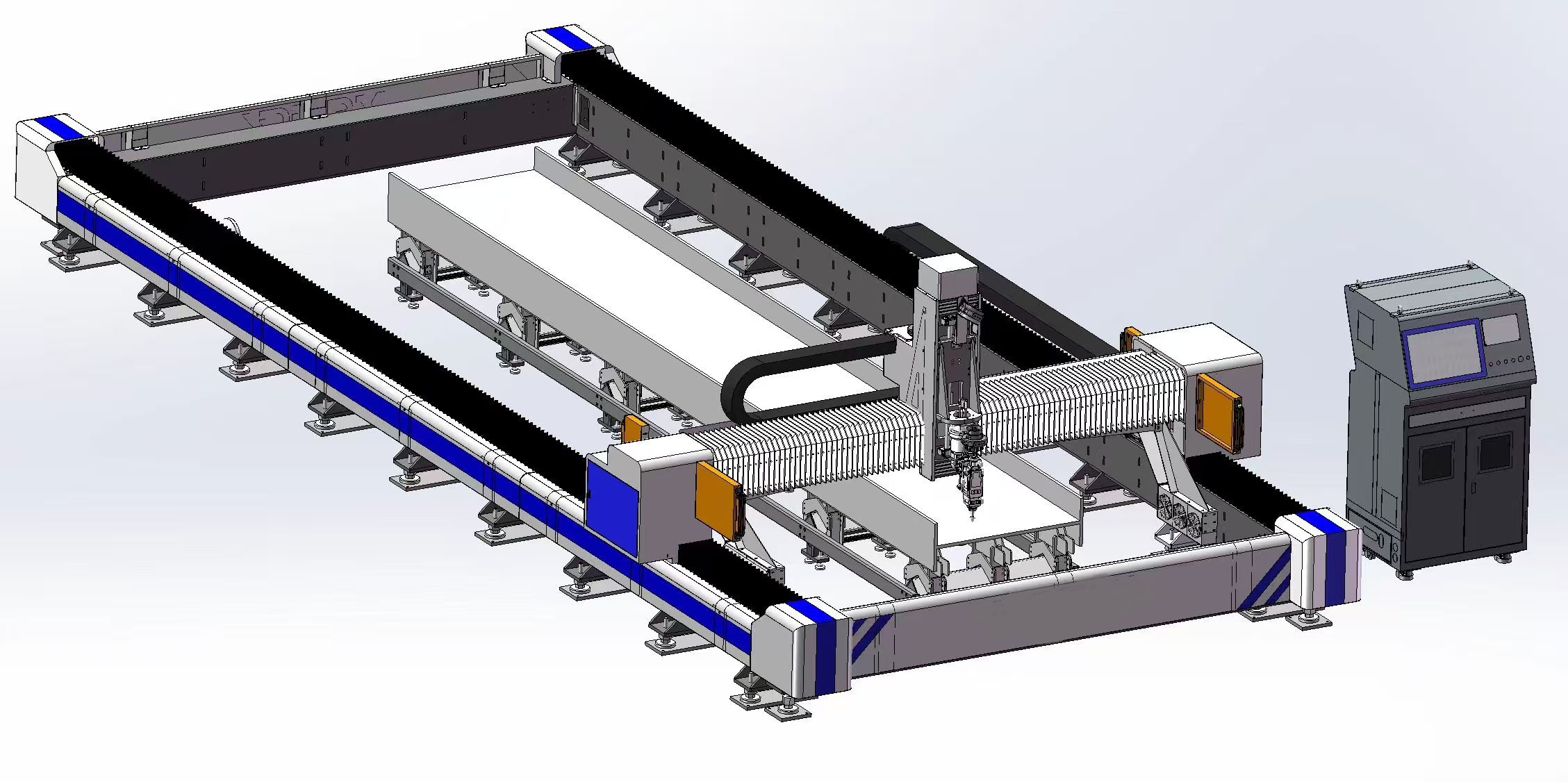
GF Series Large-Format Gantry Fiber Laser Cutting Machine -- one of the fiber laser configurations referenced in this comparison.
This page walks through edge quality, thickness range, running cost, and where each process actually wins by material -- carbon steel, mild steel, stainless steel, aluminum, and aluminum alloy -- rather than declaring one process universally better. If you're weighing plasma instead, we cover that comparison on its own dedicated page.
What Waterjet Cutting Actually Does, and Why We Don't Sell It
Waterjet cutting forces water at extremely high pressure -- often mixed with an abrasive garnet media for metal -- through a small nozzle to erode a path through the material. It adds essentially zero heat to the part, which is the entire reason it exists as a process: no heat-affected zone, no thermal distortion, no discoloration.
PCL Group builds fiber laser cutting machines and plasma cutting tables, not waterjet systems, so we won't pretend to have a product recommendation for you here. What we can offer is an honest comparison of where a cold cutting process is worth its slower speed and higher running cost against a fiber laser -- and, just as importantly, where it isn't.
Fiber Laser vs. Waterjet: Side-by-Side
The two processes solve different problems more often than they compete head-to-head -- here's the factor-by-factor comparison that actually matters for a metal-cutting decision:
| Factor | Fiber Laser | Waterjet |
|---|---|---|
| Heat input | Narrow heat-affected zone, but not zero | Zero -- a genuinely cold cutting process |
| Cutting speed, thin-to-medium gauge | Fast -- this is fiber laser's strongest range | Meaningfully slower than laser at the same thickness |
| Cutting speed, very thick plate | Drops sharply near a machine's rated ceiling | Also drops, but waterjet can technically cut almost any thickness given enough time |
| Edge quality | Bright, near weld-ready on most metals with the right assist gas | Very clean, no discoloration at all, but the cut zone gets wet |
| Running cost driver | Assist gas + electricity, scales with speed | Abrasive garnet media -- generally the most expensive per-cut consumable of the three processes |
| Post-processing | Usually none, or a light deburr | Parts come out wet; some finishes need a drying step before the next process |
| Material range | Metal only, and reflective metals need power/parameter tuning | Cuts metal, stone, glass, composites -- a genuinely different material range |
| Best fit | Production-volume metal cutting where speed and cost per part matter | Heat-sensitive parts, mixed non-metal materials, or where zero HAZ is a hard requirement |
This table compares the processes generally. The material-by-material breakdown below gets more specific about where the gap widens or narrows.
Material by Material: Fiber Laser vs. Waterjet
Waterjet's zero-heat advantage matters far more on some of these five materials than others -- here's how the tradeoff actually plays out material by material:
Carbon Steel
Carbon steel structural work almost never needs waterjet's zero-heat property -- a laser- or plasma-cut edge on structural carbon steel gets welded or ground anyway, so the extra cost and slower speed of waterjet rarely pays for itself on this material. See the full fiber laser cutting machine for carbon steel guide for power tiers and thickness capacity on carbon steel.
Mild Steel
Mild steel behaves the same way: general fabrication parts in mild steel are rarely heat-sensitive enough to justify waterjet's running cost over fiber laser, which cuts this material quickly and cheaply with oxygen assist. See the full fiber laser cutting machine for mild steel guide for power tiers and thickness capacity on mild steel.
Stainless Steel
Waterjet leaves stainless steel completely untouched by heat -- genuinely zero discoloration, which sounds like a clean win over even a nitrogen-cut laser edge. In practice, most stainless fabrication doesn't need that last increment of cosmetic perfection, and the wet cut zone plus slower speed cost real production time a nitrogen-assisted fiber laser edge already handles well enough for kitchenware, architectural, and general fabrication work. See the full fiber laser cutting machine for stainless steel guide for power tiers and thickness capacity on stainless steel.
Aluminum
Aluminum is one of the more legitimate waterjet arguments: thick aluminum plate, or a part where any heat input is a hard specification, is exactly the case waterjet was built for. For the thin-to-medium aluminum gauges most fabricators actually run, fiber laser is faster and cheaper per part with acceptably narrow HAZ. See the full fiber laser cutting machine for aluminum guide for power tiers and thickness capacity on aluminum.
Aluminum Alloy
Critical aerospace-grade aluminum alloy parts where post-cut temper cannot be disturbed at all are the strongest real case for waterjet over any thermal process, laser included. Outside that narrow, certification-driven case, fiber laser's speed and cost advantage on alloy sheet is hard for waterjet to justify. See the full fiber laser cutting machine for aluminum alloy guide for power tiers and thickness capacity on aluminum alloy.
Where Waterjet Is Still the Right Call
Waterjet earns its cost and speed penalty on a narrow set of real jobs: parts that genuinely cannot tolerate any heat input at all, mixed-material jobs that combine metal with glass, stone, or composite in one nest, or extremely thick plate where a slower but truly cold cut is worth the wait. If that's your actual job mix, waterjet -- not fiber laser, and not us -- is the right answer, and we'd say so on an inquiry call rather than push a machine that doesn't fit.
For the much larger share of metal fabrication work -- production volume, standard thickness ranges, parts that get welded or ground after cutting anyway -- fiber laser's speed and lower running cost per part make it the more practical choice, even with a narrow heat-affected zone in the mix.
Running Cost: What the Machine Price Doesn't Tell You
Power & Electricity
Fiber laser sources convert electricity to cutting power far more efficiently than the CO2 systems fiber-laser-vs-waterjet buyers shops ran a decade ago -- our 3D robotic laser cutting line alone documents better than 30% electrical efficiency, and that efficiency gap is most of why fiber laser cut per-part energy cost has fallen even as machines have gotten more powerful.
Labor and Downstream Work
The labor question in fiber-laser-vs-waterjet buyers usually isn't "how many operators" -- we don't publish a staffing formula because it depends on your loading, unloading, and secondary-finishing setup -- it's how much of that labor happens *after* the cut. A near weld-ready, low-dross edge straight off a fiber laser removes a grinding or deburring step that plasma-cut edges in fiber-laser-vs-waterjet buyers often still need, and that downstream labor difference compounds across a full production run.
Throughput
Piercing overhead is the throughput factor fiber-laser-vs-waterjet buyers buyers most often miss when comparing machines on cutting speed alone -- a nest with hundreds of small holes can cost more total machine time in piercing than in the actual cutting motion, and that number doesn't show up on a simple "meters per minute" spec.
Two Perspectives on Fiber Laser vs. Waterjet
Whether waterjet is worth its cost premium over fiber laser often depends on who in the shop is asking -- here's both real vantage points side by side:
heat-affected zone width and edge microstructure are real engineering concerns on a fiber-laser-vs-waterjet decision parts that get welded, heat-treated, or stressed after cutting -- a narrower HAZ from a well-tuned fiber laser cut gives more margin in downstream processing than a wider one from an under-optimized setup.
the most common mistake we see a fiber-laser-vs-waterjet decision buyers make is sizing a machine to their current job mix and nothing else -- if you expect volume or material mix to change in the next two to three years, that belongs in the conversation before you order, not after.
Signs Waterjet (Not Fiber Laser) Is Actually the Better Fit
Waterjet is a narrower recommendation than fiber laser, but these are the real signals that point us toward it anyway:
- A specific part or material genuinely cannot tolerate any heat input, not just "less would be nice."
- Your nest regularly mixes metal with glass, stone, or composite material in the same job.
- You're cutting thick, high-value material where a slower, cold cut is worth the wait to avoid scrap.
How to Actually Decide Between Fiber Laser and Waterjet
These five questions settle whether waterjet's cost premium over fiber laser is actually justified for your job:
- Your dominant material thickness. Thin-to-medium gauge favors fiber laser; very thick plate keeps waterjet in the conversation.
- How the cut edge is used next. If it gets welded or ground regardless, edge-quality differences matter less than pure cost per cut.
- Whether heat input is a hard specification. Zero-HAZ requirements point straight at waterjet, not either thermal process.
- Feature size and hole density. Small holes and fine detail favor fiber laser's narrower kerf regardless of material.
- Total running cost, not just machine price. Assist gas, consumables, and secondary finishing all belong in the comparison, not just the invoice.
Total Cost of Ownership
Whichever process you land on, the purchase price is only the opening number. Over a 3-5 year service life, assist gas or consumable media, electricity, and wear parts add up to a running cost that often rivals the machine price itself -- and that math shifts meaningfully between fiber laser and waterjet, since the consumable cost structure is genuinely different between the two processes rather than just a different number on the same line item.
Waterjet's abrasive garnet media is a genuinely ongoing cost that scales directly with cutting time, which is the single biggest reason its running cost per part stays higher than fiber laser's even once the zero-heat benefit is worth paying for.
Software, Installation, and Export
Our fiber laser machines run nesting and cutting-parameter software built for shop-floor use, with installation guidance and operator training included on every order -- the same support standard regardless of whether waterjet is also part of your shop's process mix.
PCL Group manufactures and exports its fiber laser line directly. Lead time depends on configuration and current factory schedule -- each machine is built and tested against your specific requirements rather than pulled off a shelf.
Common Concerns Before Ordering
Buyers weighing fiber laser against waterjet sometimes assume the two are interchangeable and the decision is purely about budget. In our experience the honest answer is closer to "different tool for a different job mix" -- which is why this page walks through material and thickness first, rather than leading with price.
Since we don't manufacture waterjet equipment, we have no incentive to talk you out of it if it's genuinely the right fit -- we'd rather say so plainly and let you source that separately than push a fiber laser that doesn't actually solve your problem.
Frequently Asked Questions
Is fiber laser always better than waterjet cutting?
No -- it depends on material thickness and how the cut edge is used next. See the material-by-material breakdown above for where waterjet still makes sense.
What's the main cost difference between fiber laser and waterjet?
Capital cost tends to favor waterjet for an equivalent worktable size; running cost per part tends to favor fiber laser on thin-to-medium gauge because of faster cycle time and less secondary finishing.
Can PCL Group supply a waterjet machine?
No -- PCL Group manufactures fiber laser and plasma equipment, not waterjet systems. We compared the processes honestly above, but a waterjet purchase would need a different supplier.
How thick can a fiber laser cut compared to waterjet?
Fiber laser stays fastest and most precise from thin gauge up through its rated ceiling (see our material pillar pages for exact thickness-by-power figures); beyond that, waterjet generally remains capable, just at lower speed or higher relative cost.
Does waterjet leave a rougher edge than fiber laser?
No -- waterjet leaves a very clean, cold-cut edge with zero heat discoloration; the tradeoff is speed and running cost, not edge quality.
Which process has a smaller heat-affected zone: fiber laser or waterjet?
Waterjet -- it adds zero heat, versus fiber laser's narrow but nonzero heat-affected zone.
Should a shop that already owns a waterjet machine add a fiber laser?
Only if your job mix genuinely needs fiber laser's speed and precision on top of existing waterjet capability -- many shops keep waterjet specifically for the heat-sensitive or mixed-material jobs it handles that a laser can't.
How do I get a real recommendation instead of a generic comparison?
Send us your material, thickness range, and monthly volume -- we'll tell you honestly whether fiber laser, our own plasma line, or (for the rare case it fits) a different process altogether is the right call, using the GF Series Large-Format Gantry Fiber Laser Cutting Machine or another configuration as the starting point.