"How much does a fiber laser cutting machine cost" is the single most common question we get, and the honest answer is that we don't publish a price list -- final cost depends on power, worktable size, automation, and shipping destination, all of which vary enough between buyers that a generic number would be more misleading than helpful.

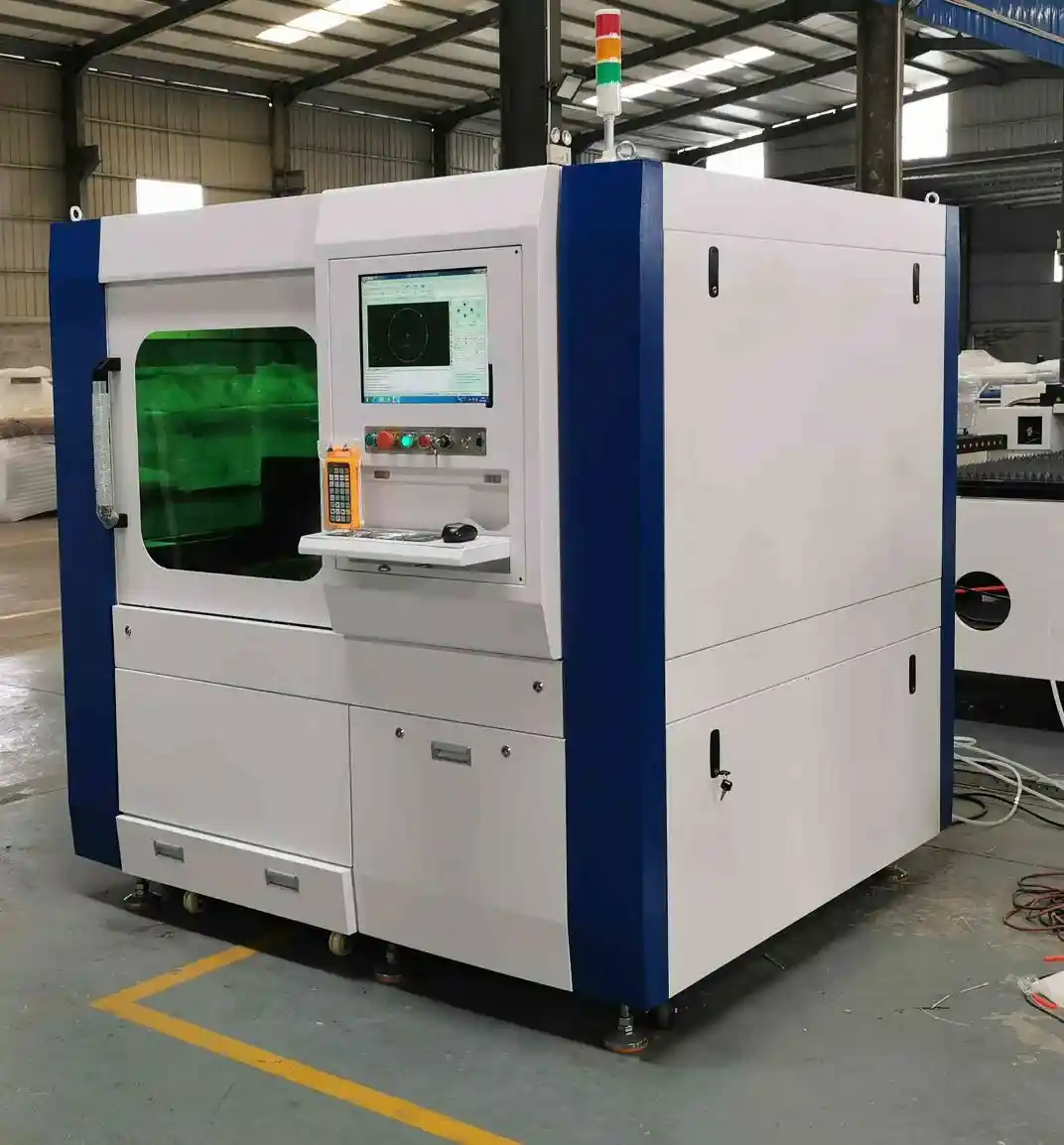
DF Series Fiber Laser Cutting Machine (DF2040) -- one of several configurations referenced in the cost breakdown below.
What we can do is break down exactly what drives that final number, and what ongoing costs to budget for beyond the invoice price -- so you can build a realistic total-cost picture before you ever request a quote.
What Actually Sets the Purchase Price
- Laser power tier. Higher power costs more, both for the source itself and the heavier structure needed to support it -- and the jump in cost between tiers isn't always linear, since some tiers require a different bed design entirely.
- Worktable / bed size. A larger cutting area means more steel, longer rails, and a bigger gantry -- cost scales with footprint, not just power, which is why two machines at the same power but different bed sizes can carry noticeably different prices.
- Automation level. Feeding systems, pallet changers, and automated loading all add cost on top of a base machine, but they also remove labor cost elsewhere -- the right comparison is total cost per part, not just the invoice.
- Laser source and head brand. Raycus, IPG, and other source brands carry different price points; the same applies to the cutting head (Raytools, PRECITEC, and others), and brand affects long-term parts availability as much as upfront cost.
- Shipping and import duties to your destination country, which we walk through as part of the total landed cost, not a hidden add-on later -- these can add a meaningful percentage to the delivered cost depending on your market.
Energy Consumption: What's Actually on the Electric Bill
The number that actually shows up on the electric bill is total connected load, not the laser source's rated power alone -- chiller, exhaust fan, and gantry motors all draw from the same service. Our DF Series, for example, publishes a real spec sheet figure of 380V 50Hz service at roughly 10kW total consumption; other lines scale up or down from there with worktable size and power tier, and we'll confirm the exact draw for cost-and-price-guide readers once we know which configuration fits your job mix.
The practical budgeting takeaway: ask for the total connected load figure for your specific configuration, not just the laser source's rated power, when you're estimating operating cost against a utility rate. A chiller and exhaust system running continuously through a shift adds up even during the minutes the laser itself isn't actively cutting.
Consumable Parts: Nozzles, Lenses, and What Actually Wears Out
Nozzles and protective lenses are the parts you'll replace most often -- they're commodity wear items by design, meant to protect the more expensive optics behind them from spatter and contamination. Replacement frequency depends on material, cutting hours, and how well gas purity and nozzle standoff are maintained, which is why we don't quote a blanket replacement schedule -- ask us for guidance specific to your material and duty cycle.
Beyond nozzles and lenses, source-specific components (which vary by which laser source brand your machine runs) are the next tier of spare parts worth keeping in stock. We stock these parts and can quote them directly rather than leaving you to source them from a third party after the fact. A rough way to budget: treat consumables as a small, steady monthly line item rather than an occasional surprise, and the actual number becomes predictable within your first few months of production.
Should You Buy a Used Fiber Laser Cutting Machine?
A used machine is tempting purely on sticker price, but it comes with real risk: no manufacturer warranty, an unknown maintenance history on the laser source and optics, and often no local parts support if something fails in the first year. Run the actual numbers before deciding -- a new entry-tier configuration is frequently close enough in price to a well-maintained used machine that the warranty and support alone tip the decision toward new.
If you do consider a used machine, at minimum ask for the laser source's actual running hours, any service records for the optics and chiller, and whether the original manufacturer will still support it -- a used machine from a manufacturer that's gone out of business or stopped exporting parts is a much bigger risk than one from an active, reachable supplier.
Warranty Terms and What They Actually Cover
Every machine we ship carries a manufacturer warranty with documented maintenance schedules and part specifications in writing -- ask for the exact terms and coverage period for your specific configuration as part of your quote, since warranty length and what's covered can vary by component (laser source, structural frame, electronics) rather than being one flat number across the whole machine.
Financing and Total Landed Cost
ROI on a new machine for cost-and-price-guide readers work is a real calculation, not a sales pitch -- it's current outsourcing or subcontract cutting cost, per-part cycle time on the new machine, and how much volume you can actually commit to it, and we'd rather walk through that math honestly than promise a payback period we can't back up.
Total Cost of Ownership, Not Just Purchase Price
Over a typical 3-5 year service life, assist gas, electricity, and wear parts often add up to a running cost that rivals the purchase price itself. Nesting efficiency matters more the higher your material cost per sheet -- software that minimizes offcuts pays for itself faster on higher-value stock than on inexpensive, scrap-tolerant metal.
1 Perspectives Worth Considering
cycle-time math has to account for piercing overhead, not just linear cutting speed, when quoting a cost-and-price-guide readers nest with a lot of small features -- treating a spec sheet's "cutting speed" number as the whole story undersells actual job time.
A Worked Example: What a Configuration Quote Actually Includes
A quote for, say, a mid-tier DF configuration typically itemizes the base machine (source, head, structural bed) at the requested power and worktable size, any automation selected (feeding, pallet changer), the control software package, standard chiller and enclosure, documented warranty terms, and freight to your destination as a separate line so you can see landed cost clearly rather than a single bundled number. We'll also flag anything that's an estimate pending final confirmation (like exact freight, which depends on final crating dimensions) versus a firm number, so you know which parts of the quote are locked and which aren't yet.
If you're budgeting for the first time, treat every number in this guide as a planning framework rather than a final figure -- the only way to convert cost drivers into an actual budget line is a direct conversation about your specific material, thickness, and volume.
What a Second Machine Typically Costs vs. the First
Shops adding a second machine sometimes assume it repeats the first purchase's cost structure exactly -- in practice, a second machine is often a different tier or configuration entirely, sized to fill a gap the first machine doesn't cover (a heavier power tier, dedicated tube capability, or added automation) rather than a duplicate of what's already on the floor. Treat a second-machine inquiry as its own sizing conversation rather than assuming the first machine's specification and price simply repeat.
Regional Cost Factors Worth Planning For
Beyond the machine and freight, several regional factors affect your real total cost that aren't PCL Group line items at all: import duties and VAT/tax treatment for industrial equipment vary significantly by country; local electrical infrastructure may require a transformer or service upgrade before the machine can even be connected; and local gas supply availability and cost for nitrogen or argon differ meaningfully between markets with mature industrial gas distribution and those without it. None of these are things we can quote, but they're worth researching or asking a local contact about before finalizing your budget, since they can move total project cost more than the difference between two machine configurations.
How Cost Compares Across Our Product Lines
Relative cost roughly tracks the specification jump between lines: an SF Series configuration for thin-gauge precision work sits at the lower end given its compact footprint and lower power range; a DF Series general-purpose machine represents the most common mid-range order; LF Series industrial configurations cost more for their heavier-duty bed and higher power ceiling; and GF Series large-format gantry machines carry the highest cost given their scale, often quoted as a fully custom configuration rather than a standard unit. An LFS coil-fed line's cost reflects its automation more than its power tier alone, since the decoiler, leveler, and servo-feed hardware are a meaningful share of the total.
Currency and Payment Terms
Payment terms and accepted currencies vary by order size and destination market -- this is part of the quote conversation rather than a fixed policy we can generalize here, since export financing arrangements differ meaningfully between a first-time buyer and a returning customer, and between regions with different standard trade practices.
Common Concerns Before Ordering
Buyers evaluating cost sometimes worry that a lower quoted price hides cut corners elsewhere -- a lighter-duty bed, an unbranded laser source, or no real warranty behind the number. That concern is fair, and it's exactly why the specification comparison and vetting checklist elsewhere on this site exist: compare the actual bed construction, source brand, and warranty terms behind any quote, not just the total at the bottom of it.

Frequently Asked Questions
Why don't you publish machine prices?
Final cost depends on power, worktable size, automation, and shipping destination -- factors that vary enough between buyers that a published number would be misleading. Send your requirements and we'll quote a specific configuration.
What's the biggest hidden cost buyers overlook?
Running cost, not purchase price -- assist gas consumption and cutting speed at your typical thickness both affect cost per part more than most buyers expect going in.
How much does a replacement nozzle or lens cost?
We don't publish a fixed parts price list here since it varies by machine configuration and laser source brand -- ask us directly for pricing on the specific parts your machine uses.
Is buying a used machine ever a good idea?
Sometimes, if you've personally verified its maintenance history and can accept no manufacturer warranty -- but run the numbers against a new entry-tier configuration first, since the gap is often smaller than buyers expect.
What does the warranty actually cover?
Coverage and terms vary by component and configuration -- ask us for the exact written warranty terms for the specific machine you're considering.
Do you offer financing?
Financing terms depend on your market and order size -- raise it during your inquiry and we'll walk through what's available for your situation.
What's included in the total landed cost besides the machine price?
Freight, import duties, and installation are the main additional line items -- these vary by destination country and are part of the quote conversation, not a surprise added later.
How do I get an exact price instead of general cost drivers?
Send your material, thickness, monthly volume, and destination country -- we'll recommend a configuration and provide written pricing for it directly.
Does a lower quoted price always mean lower quality?
Not always, but it's worth checking what's behind the number -- bed construction, laser source brand, and warranty terms can all differ between two quotes at a similar price point.
How predictable is monthly consumable cost once a machine is running?
Fairly predictable after the first few months of production -- nozzles and lenses become a steady, budgetable line item once you know your typical material mix and cutting hours.
What's included in a written quote versus estimated later?
The base machine, selected automation, control software, warranty terms, and freight are itemized in a written quote -- anything dependent on final crating or destination-specific duties is flagged as an estimate pending confirmation.
Do payment terms differ for first-time versus returning buyers?
Often yes -- payment and financing arrangements can differ by order size, destination market, and purchase history, so this is addressed directly during your specific quote conversation.
Can I request itemized pricing for each feature or automation option separately?
Yes -- ask for an itemized breakdown when you request your quote so you can see exactly what each option adds to the total.