Here's the number shipbuilding industry buyers usually want first: which machine, at which power, actually covers the carbon steel thickness range this industry runs day to day. We'll get to the full picture, but that's the anchor. Shipbuilding Industry work is heavy carbon steel and stainless steel fabrication where thick-plate cutting speed and edge quality both factor into overall build schedules, and that shapes which fiber laser configuration actually makes sense more than any single spec on a data sheet.

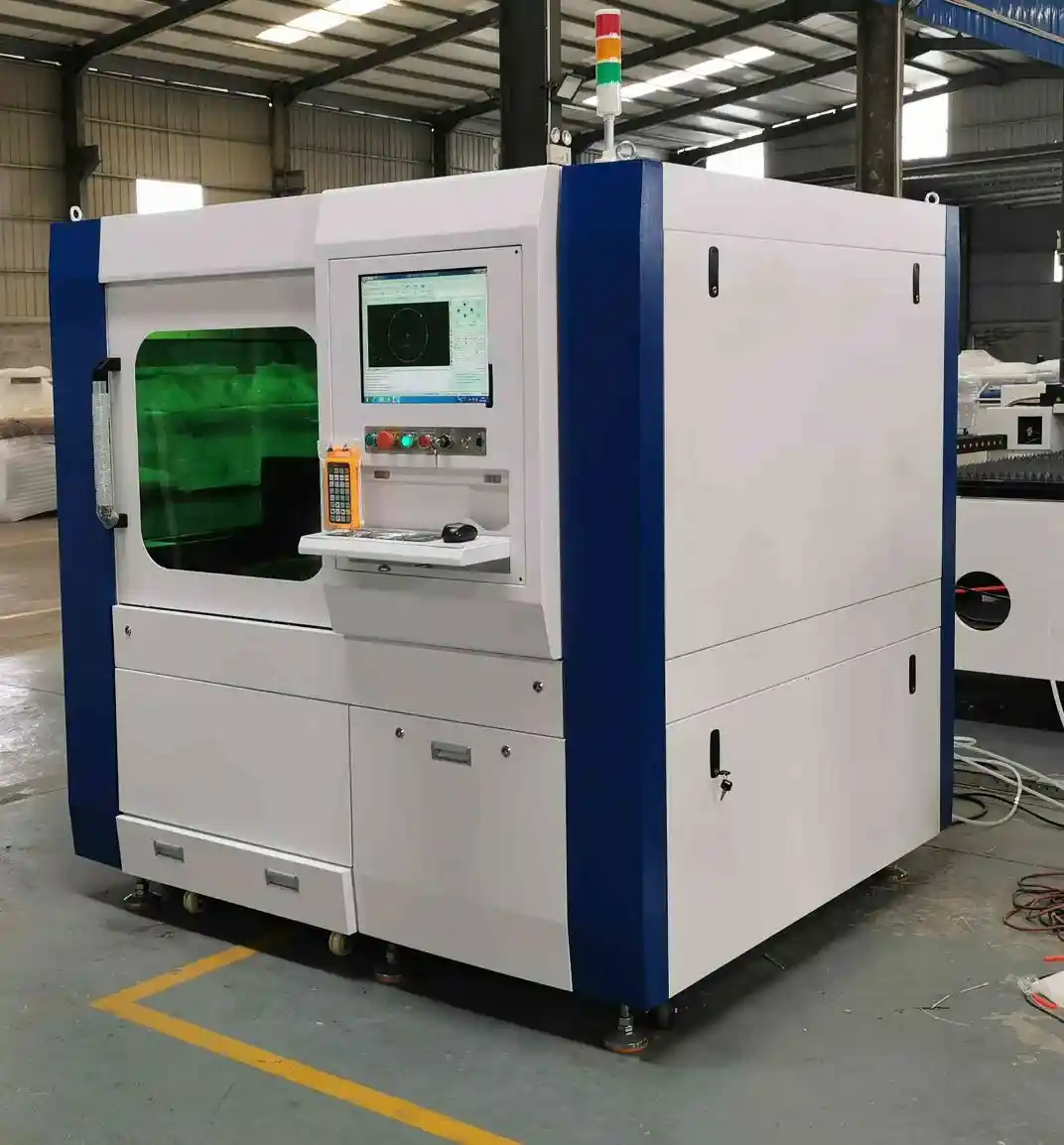
GF Series Large-Format Gantry Fiber Laser Cutting Machine -- one of the configurations covered below for shipbuilding industry.
This page covers what actually differs for shipbuilding industry: typical material and thickness, running-cost drivers specific to this work, how the job looks from the operator's chair versus the engineer's or the buyer's side of the table, and which PCL Group configuration fits which shop size.
Real Jobs, and Mistakes Worth Avoiding
A Typical Job
A common real-world case in shipbuilding industry: a metal art or heavy decor shop cutting thick carbon steel silhouettes where oxide coloring on the edge is actually part of the look.
A Mistake Worth Avoiding
For shipbuilding industry work specifically: piercing thick carbon steel takes measurable dwell time per hole -- a nest with hundreds of small holes can cost more machine time in piercing than in actual cutting.
Running Cost in Shipbuilding Industry: Power, Labor, and Fume Extraction
Throughput
Piercing overhead is the throughput factor shipbuilding industry buyers most often miss when comparing machines on cutting speed alone -- a nest with hundreds of small holes can cost more total machine time in piercing than in the actual cutting motion, and that number doesn't show up on a simple "meters per minute" spec.
Fume Extraction
The honest engineering answer on fume extraction for shipbuilding industry: size it to your worst material, not your average one. A shipbuilding industry shop running mostly thin aluminum with an occasional galvanized job still needs extraction rated for the galvanized run, because that's the one with a real health-and-safety requirement behind it, not just a housekeeping preference.
Two Perspectives on Cutting Carbon Steel for Shipbuilding Industry
A machine purchase for shipbuilding industry gets evaluated differently depending on who in the shop is looking at it -- here's the same decision from two real vantage points:
integrating a new machine into an existing CAD/CAM and nesting workflow is as much the engineering question as the laser spec itself -- a machine that speaks the software your shipbuilding industry shop already runs saves real integration time over one that needs a parallel toolchain.
ROI on a new machine for shipbuilding industry work is a real calculation, not a sales pitch -- it's current outsourcing or subcontract cutting cost, per-part cycle time on the new machine, and how much volume you can actually commit to it, and we'd rather walk through that math honestly than promise a payback period we can't back up.
None of these views is more "correct" than the others -- a configuration that only satisfies one of them (say, the lowest sticker price with none of the operator's or engineer's concerns addressed) tends to become an expensive mistake within the first year of shipbuilding industry production.
Signs a Fiber Laser Actually Fits Your Shipbuilding Industry Shop
Not every shipbuilding industry shop needs the same configuration -- these are the real signals we listen for on an inquiry call:
- Thick carbon steel or stainless plate is a daily material, not an occasional job.
- Build schedule depends on cutting speed at real plate thickness, not a thin-gauge spec.
- You also cut structural beam or large-diameter pipe alongside flat plate.
Carbon Steel Thickness in Shipbuilding Industry: What's Typical
Most shipbuilding industry parts we see run in a thickness range where a 2000W configuration covers carbon steel at 1-20mm -- lighter or heavier jobs shift that tier up or down, which is why we size to your thickest regular part, not an average.
For the complete carbon steel power-and-thickness breakdown (500W to 30,000W, every tier we build), see our dedicated fiber laser cutting machine for carbon steel guide -- this page focuses on what's specific to shipbuilding industry rather than repeating that full chart.
How to Choose a Fiber Laser Cutting Machine for Shipbuilding Industry
Buyers in shipbuilding industry tend to focus on power first -- power matters, but these five checks catch most of the expensive mistakes we see on this specific type of order:
- Size power to your thickest regular shipbuilding industry part, not your thinnest -- the most common expensive mistake we see.
- Confirm assist gas delivery for carbon steel at the pressure your typical thickness needs.
- Match worktable size to your actual stock, with nesting room rather than a bed sized to the exact sheet.
- Ask for a software demo, not just a spec sheet -- your operators will live in the nesting/cutting interface daily.
- Check regional warranty and spare-parts support before ordering, especially for source-specific consumables.
Total Cost of Ownership
The purchase price is only the first number that matters when budgeting fiber laser cutting for shipbuilding industry. Over a typical 3-5 year service life, oxygen consumption, electricity, and wear parts (nozzles, protective lenses, and eventually the cutting head) add up to a running cost that often rivals the purchase price itself -- and on carbon steel specifically, that cost scales with how close to the machine's rated thickness ceiling you run day to day.
Nesting efficiency matters more the higher carbon steel stock costs per sheet -- software that minimizes offcuts pays for itself faster on higher-value material than on inexpensive, scrap-tolerant metal, which is worth factoring into the shipbuilding industry cost picture alongside the running-cost drivers above.
Software, Support, and Export
Operators programming shipbuilding industry jobs spend more working time in the control software's nesting and cutting-parameter interface than at the laser source itself -- our machines run nesting software built for shop-floor use, which shortens the learning curve on new carbon steel jobs. Installation guidance and operator training are included with every order.
PCL Group manufactures and exports this equipment directly rather than reselling another factory's design, and ships to shipbuilding industry buyers worldwide. Lead time depends on configuration and current factory schedule -- each machine is built and tested against your specific requirements rather than pulled off a shelf -- and we keep spare parts (nozzles, lenses, source-specific components) in stock rather than sourcing them after a machine cutting carbon steel is already running.
Common Concerns Before Ordering
Buyers in shipbuilding industry sometimes worry that after-sales support disappears once a machine ships from overseas. Our engineering team stays reachable directly for technical questions well after installation, and we keep spare parts stocked for carbon steel-relevant consumables because we know that gap is where overseas purchases most often go wrong for other buyers.
After an initial inquiry about shipbuilding industry work, expect a short back-and-forth to confirm your material, thickness, and monthly volume, followed by a written quote for a specific configuration -- not a generic price list. Production begins once terms are confirmed, with lead time depending on configuration and current factory schedule.
Frequently Asked Questions
What's the best fiber laser cutting machine for shipbuilding industry?
It depends on your typical carbon steel thickness and volume -- for most shipbuilding industry shops we start the conversation around the GF Series Large-Format Gantry Fiber Laser Cutting Machine, then adjust power and worktable size from there.
How much does running cost matter for shipbuilding industry compared to the machine price?
For shipbuilding industry work, more than most buyers expect -- assist gas (oxygen for carbon steel), electricity, and downstream labor (grinding, deburring) all add up over the machine's service life on a shipbuilding industry floor. See the running-cost section above for specifics.
Do I need special fume extraction for shipbuilding industry?
For shipbuilding industry specifically, it depends on the material in your job mix, not the industry name -- we size fume extraction to whichever material you run needs the most, and will tell shipbuilding industry buyers honestly if that means an upgrade from what they currently run.
How many operators does a fiber laser cutting machine need for shipbuilding industry work?
We don't publish a fixed staffing number for shipbuilding industry because it depends on your loading, unloading, and finishing workflow -- ask us to walk through your specific shipbuilding industry process and we'll give you a realistic answer, not a generic one.
Can one machine handle the full range of parts a shipbuilding industry shop typically runs?
For most shipbuilding industry shops, often yes within one material's thickness range, but a job mix that spans several metals or a wide thickness range may point to a different configuration than a single-material shipbuilding industry operation -- send us your actual part mix and we'll confirm.
What's the lead time for a fiber laser cutting machine ordered for shipbuilding industry?
For a shipbuilding industry order, lead time depends on configuration and current factory schedule, since each machine is built and tested against your specific requirements rather than shipped off a shelf -- we'll give you a specific timeline as part of your shipbuilding industry quote.
Should a small shipbuilding industry shop start with a smaller machine and upgrade later?
For a smaller shipbuilding industry operation, often yes -- if your carbon steel volume today doesn't justify a full production-scale machine, an entry-tier configuration sized to your current thickest shipbuilding industry job is usually the safer financial choice over stretching the budget for headroom you may not use for another year or two.
Do you offer installation and operator training for shipbuilding industry customers?
Yes -- for every shipbuilding industry order, installation guidance and operator training on the nesting and cutting-parameter software are included regardless of which configuration you choose.
What assist gas does carbon steel cutting use in shipbuilding industry applications?
In shipbuilding industry work, oxygen is the standard choice for carbon steel -- oxygen reacts exothermically with the hot steel, adding extra cutting energy on top of the laser -- this is what lets fiber lasers punch through thick carbon steel plate faster than they could on inert gas alone.