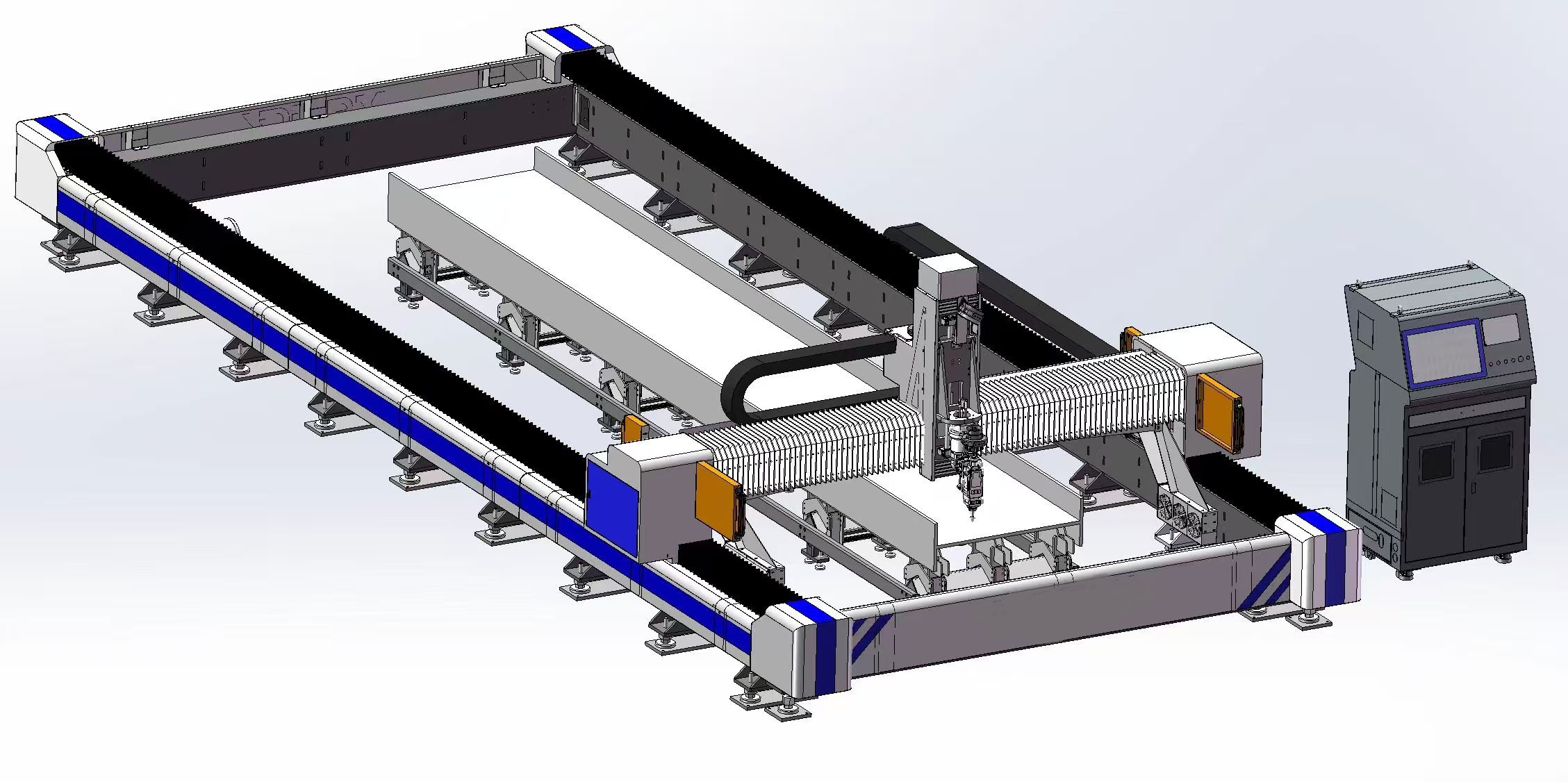
Buying a tube or pipe laser cutting machine involves a few checks that don't come up on a flat-sheet purchase at all -- chuck length capacity, small-diameter handling, and automatic loading rack options chief among them. As with every machine we sell, we don't publish a price list, but we can walk through exactly what drives cost on a tube-specific order.

CNC Fiber Laser Pipe Cutting Machine -- Φ20mm - Φ220mm, round, square, rectangular, special-shaped.
Most of what makes a tube purchase different from a flat-sheet one comes down to the chuck and rotary system rather than the laser source itself -- keep that distinction in mind as you work through the checklist and cost drivers below.
The Tube Buyer's Checklist
- Diameter range matched to your actual stock, including your smallest regular diameter -- some tube platforms handle a wide range but lose precision or speed at the small end.
- Chuck length capacity -- confirm the maximum bar length your chuck and support system can handle, since this varies more between suppliers than diameter range does.
- Small-diameter handling -- if your job mix includes narrow tube, ask specifically how the chuck and centering system perform at your smallest diameter, not just the platform's rated minimum.
- Materials actually needed -- confirm the specific materials on your job list are supported, not just a generic "metal tube" claim.
- Automatic loading rack -- worth it once tube volume is high enough that manual bar loading between cuts becomes a real share of your cycle time.
- Intersection and miter cutting quality -- ask to see actual sample parts with cut intersection joints, since this is where tube-specific programming quality shows up most clearly.
- Control software built for tube programming specifically, not a flat-sheet interface adapted after the fact.
- Warranty and regional parts support, the same as any machine purchase -- confirm this before, not after, ordering.
Once you've worked through each item, you should have a clear enough picture of your actual requirement to have a genuinely productive first conversation with any supplier -- ours included -- rather than starting from "how much does a tube laser cost" with no further detail behind it.
What Actually Drives Tube Machine Price
- Diameter range and chuck design. A wider diameter range and heavier-duty self-centering chuck system cost more to engineer than a narrow-range platform.
- Automation. An automatic loading rack removes manual bar-handling time but adds meaningfully to the base machine cost.
- Power tier. The same power-cost relationship applies here as on flat-sheet machines -- higher power costs more for the source and the structure supporting it.
- Axis count and motion control. 4-axis simultaneous motion with real-time distortion compensation costs more to engineer than a simpler 2-axis rotary setup.
As with flat-sheet machines, two suppliers quoting the same headline power tier and diameter range can land at very different price points once chuck engineering and automation are accounted for -- treat the number alone as incomplete information until you've compared what's actually behind it.
Pipe Cutting Machine Manufacturers and Suppliers: What to Check
The same vetting principles that apply to any fiber laser purchase apply doubly to tube equipment, since tube-specific engineering quality is easy to overstate on a spec sheet and hard to verify without seeing real parts: ask for actual cut samples showing intersection joints and small-diameter work, not just a straight-cut demonstration piece, and confirm whether the manufacturer actually engineers its own chuck and rotary system or sources it as an off-the-shelf component bolted onto a flat-bed platform.
Why We Don't Publish a Tube Machine Price List
The same reasoning applies here as on our general cost guide: diameter range, chuck design, automation, and power tier all move final price enough that a published number would mislead more buyers than it would help. Send your tube dimensions, materials, and volume and we'll quote a specific configuration in writing.
None of this rules out working with a supplier that also sells flat-sheet machines -- many capable manufacturers, ours included, build both -- but it's worth confirming that their tube line reflects genuine dedicated engineering rather than a secondary product bolted on to round out a catalog.
New vs. Used Tube Machines
A used tube machine carries the same risks as any used fiber laser equipment -- no manufacturer warranty and unknown history on the laser source -- plus a tube-specific risk: chuck and rotary-axis wear is harder to assess secondhand than a flat gantry's condition, since centering accuracy degrades gradually and isn't always obvious without running your own test parts. Weigh that added uncertainty against the used-price discount before deciding.
Two Perspectives Worth Considering
the conversation with a tube buying guide readers customer usually comes down to cost per part and lead time, not the spec sheet -- which is why we walk through assist gas, cutting speed at your actual thickness, and nesting efficiency before quoting a configuration rather than leading with a power number.
heat-affected zone width and edge microstructure are real engineering concerns on tube buying guide readers parts that get welded, heat-treated, or stressed after cutting -- a narrower HAZ from a well-tuned fiber laser cut gives more margin in downstream processing than a wider one from an under-optimized setup.
How Tube Buyers' Priorities Differ From Flat-Sheet Buyers
Flat-sheet buyers tend to lead with power and worktable size; tube buyers, in our experience, lead with diameter range and chuck length far more often, and only get to power and material questions once those two are settled. That's a reasonable instinct -- diameter and chuck length rule out unsuitable machines faster than any other spec, since a platform that simply can't hold your stock length or smallest diameter is disqualified regardless of how well it performs on power or speed.
A Sample Tube Machine Buying Timeline
The process runs through the same broad stages as any machine purchase, with tube-specific steps added: initial conversation about diameter range, wall thickness, material, and typical part geometry (especially intersection/miter requirements); a specific configuration recommendation including chuck design and any automation; sample-part review if you request cut samples in your material and shape; a written quote; then manufacturing, testing, and shipping. The sample-part step is worth insisting on for a tube purchase specifically, since it's the single best way to verify intersection-cut quality before committing.
Specifications Worth Comparing Across Suppliers
| Specification | What to Actually Check |
|---|---|
| Diameter range | The published minimum and maximum, and how accuracy holds at your smallest regular size |
| Chuck length capacity | Maximum bar length supported -- confirm against your actual stock length, not a rounded figure |
| Rotation speed | Higher RPM generally means faster cycle time on longer runs, though real throughput depends on part geometry too |
| Axis count | 4-axis simultaneous motion generally handles complex intersections better than a simpler 2-axis rotary setup |
| Materials supported | Confirm your specific materials are explicitly supported, not just a generic 'metal' claim |
Financing and Total Landed Cost for Tube Equipment
the conversation with a tube machine buyers customer usually comes down to cost per part and lead time, not the spec sheet -- which is why we walk through assist gas, cutting speed at your actual thickness, and nesting efficiency before quoting a configuration rather than leading with a power number.
Freight for tube equipment follows the same destination-dependent logic as any of our machines -- crating and shipping a dedicated tube platform with a long chuck and rail system sometimes needs different logistics planning than a compact flat-bed machine of similar value, which is worth raising early in your quote conversation if your facility has specific unloading or access constraints.
Warranty and Long-Term Parts Support for Tube-Specific Components
Beyond the standard consumables shared with flat-sheet machines (nozzles, lenses), a tube platform has its own wear items worth asking about specifically -- chuck jaws and centering components see continuous mechanical wear from clamping and rotating stock that a flat-bed machine's clamping system doesn't experience in the same way. Confirm replacement availability and typical wear intervals for these tube-specific parts as part of your warranty conversation, not just the laser-side consumables.
Regional Support for Tube Equipment
Confirm regional service and parts support for tube-specific components the same way you would for any machine purchase -- a chuck jaw or centering component failure halfway through a production run is a bigger disruption if the replacement has to travel from overseas with no local stock, so ask specifically about tube-part lead times in your region, not just laser-side consumables.
The same applies to operator training -- confirm that training covers tube-specific programming (bar nesting, intersection geometry, chuck operation) explicitly, rather than assuming general fiber laser training automatically transfers to a rotary tube platform without a dedicated training component.
Comparing Quotes Between Suppliers
When comparing tube machine quotes from different manufacturers, line up the specification comparison table above item by item rather than comparing bottom-line price alone -- two quotes at a similar total can represent very different chuck engineering, axis count, and automation level. Ask each supplier for the same set of sample-part evidence and specification detail so you're actually comparing equivalent configurations rather than a fully automated line against a manually loaded one.
Common Tube-Specific Buying Mistakes
- Sizing diameter range around your largest job only, without confirming accuracy holds at your smallest regular diameter too.
- Assuming a flat-sheet supplier's tube attachment matches a dedicated tube platform's engineering -- ask directly whether the chuck and rotary system were purpose-built or retrofitted.
- Skipping the sample-part request and relying on spec-sheet claims alone for intersection and miter cut quality.
- Underestimating chuck-length needs by measuring only your current typical bar length rather than the longest stock you might realistically need to run.
Common Concerns Before Ordering
A tube purchase is a longer-term commitment than most shop equipment, and it's reasonable to want real confidence before ordering rather than relying on a spec sheet and a sales conversation alone.
Buyers new to tube equipment sometimes assume any fiber laser supplier can simply add a rotary chuck to a flat-bed machine and call it a tube platform. The engineering behind a genuinely good tube machine -- self-centering dual chucks, real-time capacitive distortion sensing, intersection-joint programming -- is a meaningfully different discipline than flat-sheet cutting, which is exactly why we'd recommend asking for real tube sample parts before ordering from any supplier, ours included.
Frequently Asked Questions
What's the price of a tube laser cutting machine?
We don't publish a price list -- diameter range, chuck design, automation, and power tier all move final cost. Send your dimensions and volume for a written quote.
What's the smallest tube diameter you can cut?
Confirm your specific smallest diameter with us directly -- small-diameter handling varies by chuck design even within the same platform's rated range.
Is an automatic loading rack worth the added cost?
It depends on volume -- once manual bar loading is eating a meaningful share of your cycle time, the automation typically pays back; for lower-volume tube work it's often not yet justified.
How do I evaluate a tube machine manufacturer before ordering?
Ask for real cut samples showing intersection joints and small-diameter work, and confirm whether they engineer their own chuck and rotary system rather than bolting a generic one onto a flat-bed platform.
Should I buy a used tube cutting machine?
Weigh the used-price discount against added risk -- chuck and rotary-axis wear is harder to assess secondhand than flat-gantry condition, and there's no manufacturer warranty.
What's chuck length capacity, and why does it matter?
It's the maximum bar length your chuck and support system can handle -- confirm it against your actual stock length, since it varies more between suppliers than diameter range does.
Can PCL Group supply both the tube machine and downstream welding equipment?
Yes -- ask about pairing a tube cutting machine with our welding robot line if your tube parts go straight to welding after cutting.
Should I request sample parts before ordering a tube machine?
Yes -- sample parts in your actual material and shape, especially showing intersection or miter cuts, are the most reliable way to verify a supplier's real tube-cutting quality before committing.
How long does a typical tube machine order take from inquiry to delivery?
It depends on configuration and current factory schedule, similar to our flat-sheet machines -- we'll give you a specific timeline once your configuration is confirmed.
Does rotation speed alone determine tube cutting throughput?
No -- part geometry, especially how many intersections or feature changes are in the nest, affects real throughput as much as rated rotation speed does.
Are chuck jaws and centering components covered under warranty?
Ask specifically -- these are mechanical wear items with continuous use, distinct from laser-side consumables like nozzles and lenses, and warranty terms should address both categories.
What's the biggest tube-specific mistake buyers make?
Sizing diameter range around the largest job only without confirming accuracy at the smallest regular diameter, and skipping a sample-part request before ordering.
Does freight for a tube machine work differently than for a flat-bed machine?
Sometimes -- a long chuck and rail system can need different crating and unloading logistics than a compact flat-bed machine, worth raising early if your facility has access constraints.
How do I compare tube machine quotes fairly across suppliers?
Line up specifications item by item -- diameter range, chuck length, axis count, automation -- rather than comparing bottom-line price alone, and request equivalent sample-part evidence from each supplier.