Tube and pipe cutting shows up across a wider range of industries than flat-sheet work, mostly because tube is a structural building block in its own right -- frames, rails, and chassis components all start as tube before they become a finished product. This page walks through four industries where tube cutting is a core, not incidental, part of the process.

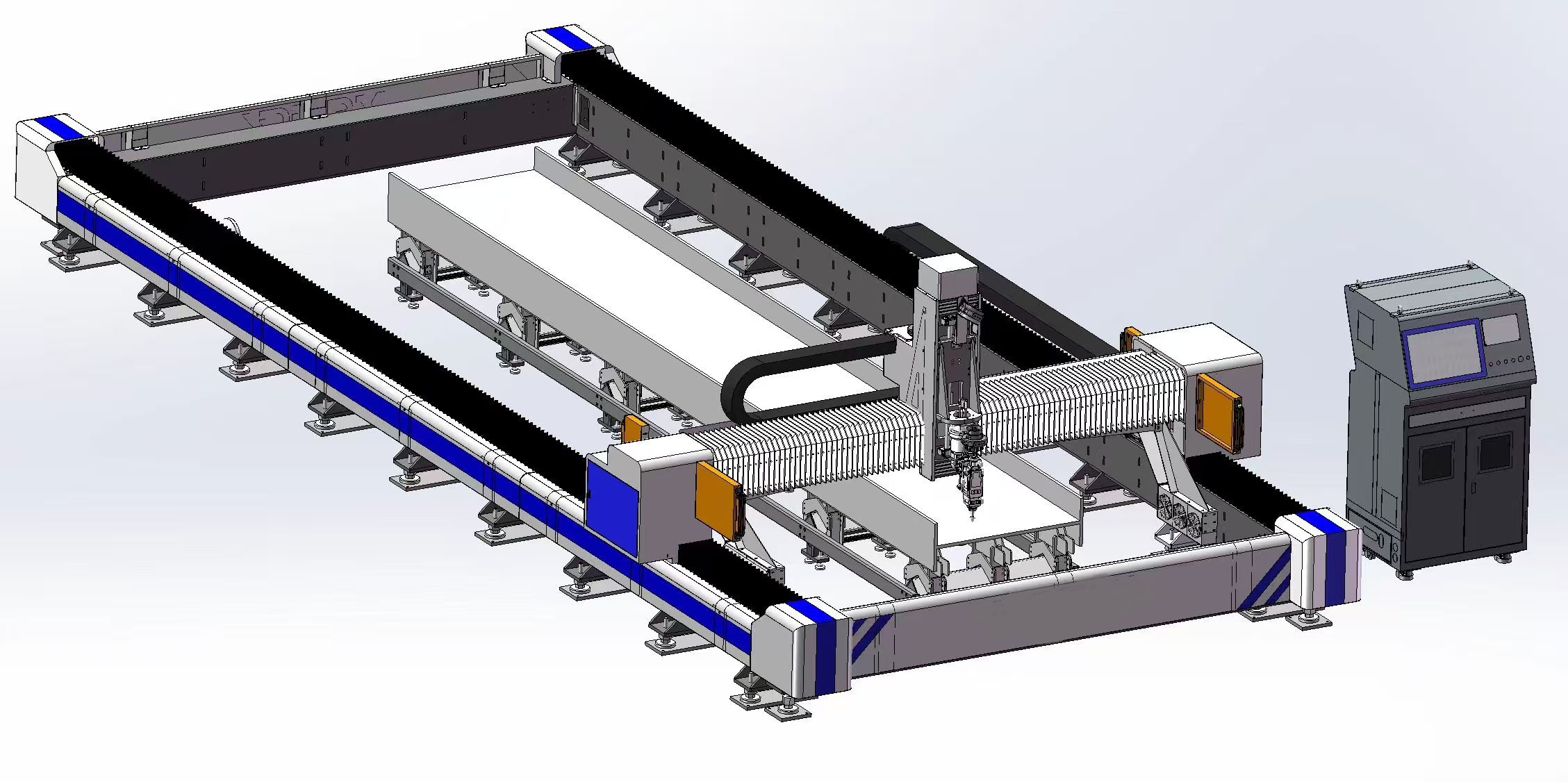
CNC Fiber Laser Pipe Cutting Machine -- Flight cutting technology keeps the tube moving continuously during cuts.
Furniture Making
Tube-frame furniture -- chair and table legs, shelving frames, structural bases -- has shifted toward laser-cut tube over bent or welded angle stock specifically because a laser-cut intersection joint needs far less manual fit-up before welding. For furniture headed to powder coating afterward, a clean, consistent cut edge also means a more even coating finish than a rougher plasma-cut or saw-cut tube end would give.
Handrail and Railing Fabrication
Railing work lives and dies on miter and intersection accuracy -- a handrail system is essentially a network of tube-to-tube joints, and zero secondary grinding needed on cut edges directly removes a manual grinding step that railing fabricators otherwise build into their process by default. Eliminates a manual deburring step from the workflow, which on a railing job with dozens of joints per run adds up to real labor savings rather than a marginal convenience.
The Automotive Industry: Chassis and Exhaust Tube
Automotive chassis and exhaust tube work sits at a different tolerance level than furniture or railing -- wall thickness and diameter tolerances matter for downstream welding and fit-up into an assembly where every part needs to interchange with the next one off the line. This is where a machine's rated diameter and wall-thickness precision, not just its ability to cut tube at all, becomes the deciding factor.
The Fitness Equipment Industry
Fitness equipment frames -- weight racks, machine frames, structural supports -- are almost entirely tube-based construction, usually round or square steel tube in mid-range wall thickness. Visible welds and joint quality matter here in a way that's closer to furniture than to automotive: the finished product is seen and touched by end users, so a clean intersection cut that reduces visible weld buildup is a real product-quality factor, not just a production efficiency one.
What These Four Industries Have in Common
Despite very different end products, all four industries above share the same underlying requirement: a clean, accurate intersection or miter cut that reduces manual fit-up before welding. That's the single capability worth testing directly with sample parts before buying a tube machine for any of these applications, more than diameter range or power tier alone.
Downstream: Welding After Cutting
All four industries above typically weld tube assemblies after cutting, and a 6-axis welding robot system paired with a clean laser-cut tube edge compounds the labor savings from cutting all the way through to a finished, welded frame -- holds a constant torch angle and travel speed through complex 3d weld paths, which matters more when the incoming tube joints are already weld-ready rather than needing manual grinding first.
Two Perspectives Worth Considering
heat-affected zone width and edge microstructure are real engineering concerns on tube-by-industry readers parts that get welded, heat-treated, or stressed after cutting -- a narrower HAZ from a well-tuned fiber laser cut gives more margin in downstream processing than a wider one from an under-optimized setup.
ROI on a new machine for tube-by-industry readers work is a real calculation, not a sales pitch -- it's current outsourcing or subcontract cutting cost, per-part cycle time on the new machine, and how much volume you can actually commit to it, and we'd rather walk through that math honestly than promise a payback period we can't back up.
Material Choices Across These Four Industries
| Industry | Typical Tube Material |
|---|---|
| Furniture Making | Mild steel or aluminum tube, usually headed for powder coating |
| Handrail & Railing | Stainless steel for visible/exterior runs, mild or carbon steel for interior structural rail |
| Automotive Chassis/Exhaust | Aluminum for weight-sensitive components, carbon or alloy steel for structural chassis tube |
| Fitness Equipment | Mild or carbon steel tube in mid-range wall thickness, occasionally stainless for premium finishes |
Running Cost Considerations by Industry
Unattended run time matters more to tube-cutting furniture and railing shops throughput than peak cutting speed in a lot of real shop schedules -- a machine that can run a coil-fed or heavily automated job through a lunch break or shift change adds effective daily output without adding a second operator.
Sizing a Tube Machine to Your Industry's Typical Part
Rather than sizing around the industry label, size around your actual typical part: a furniture leg's diameter and length differ meaningfully from an automotive exhaust tube's, and a railing system's bar length differs from a fitness equipment frame's typical stock size. Send us your three or four most common tube parts across material, diameter, wall thickness, and length, and we'll recommend a configuration around those specifics rather than a generic "industry standard" machine that may not actually match your production.
Structural Steel Fabrication: A Fifth Adjacent Case
Beyond the four industries above, heavier structural steel fabrication -- larger-diameter tube and pipe combined with flat-plate cutting in the same shop -- is a related but distinct case, usually calling for a larger-format platform or a combination of our tube and flat-sheet lines rather than a single compact tube machine sized for furniture or railing work. If your shop spans both structural tube and flat plate, that combination is worth discussing directly rather than assuming one machine covers the full range.
The common thread across all four is that tube isn't a secondary cutting task bolted onto a flat-sheet operation -- it's core to how the finished product actually gets built, which is why matching the machine to the specific joint and tolerance requirements of your industry matters more here than in general fabrication.
Automation by Industry
Automation priorities differ across these four industries more than the cutting requirement itself does. Furniture and fitness equipment manufacturers running repeat frame designs at volume benefit most from an automatic loading rack once a design stabilizes into steady production. Railing fabricators, whose jobs vary more by project, tend to prioritize fast changeover and nesting software over loading automation. Automotive chassis and exhaust suppliers, often running the highest sustained volume of the four, are the most likely candidates for a fully automated tube line rather than a manually loaded platform.
Whichever of these industries your shop serves, the underlying advice is consistent: describe your actual finished product and joint requirements to us directly, rather than starting from an industry label, and we'll recommend a configuration around what you actually build.
Certification and Traceability Considerations
Automotive tube work in particular sometimes carries supplier certification or traceability requirements that furniture and fitness equipment production typically doesn't -- if your application has formal quality or traceability requirements, confirm what documentation accompanies each machine and configuration before ordering, since this affects control-system logging capability as much as the cutting hardware itself.
Common Concerns Before Ordering
Buyers in these industries sometimes assume tube cutting equipment is generic across applications, when the real differentiator is intersection-joint quality and diameter/wall precision matched to their specific end use. A furniture shop and an automotive chassis fabricator can both legitimately need a "tube laser cutter" and still need meaningfully different configurations underneath that label.
If your business genuinely spans two or more of these industries -- a shop making both furniture and fitness equipment frames, for instance -- that overlap usually simplifies the decision rather than complicating it, since the tube dimensions and materials involved often turn out to be similar enough for one configuration to cover both product lines.

Frequently Asked Questions
Which industries use tube laser cutting the most?
Furniture making, handrail and railing fabrication, automotive chassis/exhaust work, and fitness equipment manufacturing are four of the most common, though tube cutting shows up in general fabrication and structural work too.
Does furniture-grade tube cutting need the same precision as automotive?
No -- automotive chassis and exhaust tube typically demands tighter wall-thickness and diameter tolerance for interchangeable-part assembly than furniture or railing work does.
Why does intersection cut quality matter so much across these industries?
Because all four typically weld tube assemblies after cutting -- a clean, accurate intersection cut removes a manual grinding and fit-up step that otherwise adds labor to every joint.
Can one tube machine serve more than one of these industries?
Often yes, if diameter range and material match -- the configuration details (wall thickness precision, chuck size) matter more than the industry label itself.
Do fitness equipment frames need a different chuck than furniture frames?
Not necessarily a different chuck, but confirm your specific tube diameter and wall thickness range against any platform's rated capacity, since both industries commonly run similar mid-range steel tube.
Should I pair a tube cutting machine with welding automation?
If your tube parts go straight to welding after cutting, pairing with a welding robot compounds the labor savings from a clean, weld-ready cut edge -- ask us about configuring both together.
What tube material is most common in railing versus furniture work?
Stainless steel is common for visible or exterior railing runs, while furniture tube is more often mild steel or aluminum headed for powder coating.
Is structural steel fabrication the same as these four industries?
It's related but distinct -- structural work usually involves larger-diameter tube and pipe combined with flat-plate cutting, often calling for a larger-format platform rather than a compact tube machine.
How should I decide on machine sizing if my shop serves more than one of these industries?
Send us your three or four most common tube parts across all the industries you serve, and we'll size a configuration around your actual range rather than one industry's typical part alone.
Which of these four industries benefits most from full automation?
Automotive chassis and exhaust suppliers, typically running the highest sustained volume of the four, are the most likely candidates for a fully automated tube line.
Do automotive tube parts need special certification or documentation?
Sometimes -- automotive supply chains can carry certification or traceability requirements that furniture and fitness equipment work typically doesn't. Confirm your specific requirement before ordering.