"Can your machine cut square tube, not just round?" is one of the most common questions we get on a tube inquiry, and the honest answer is that shape changes more about the cutting process than most buyers expect -- chuck design, motion control, and even cutting speed all shift depending on whether you're running round, square, rectangular, or oval stock.

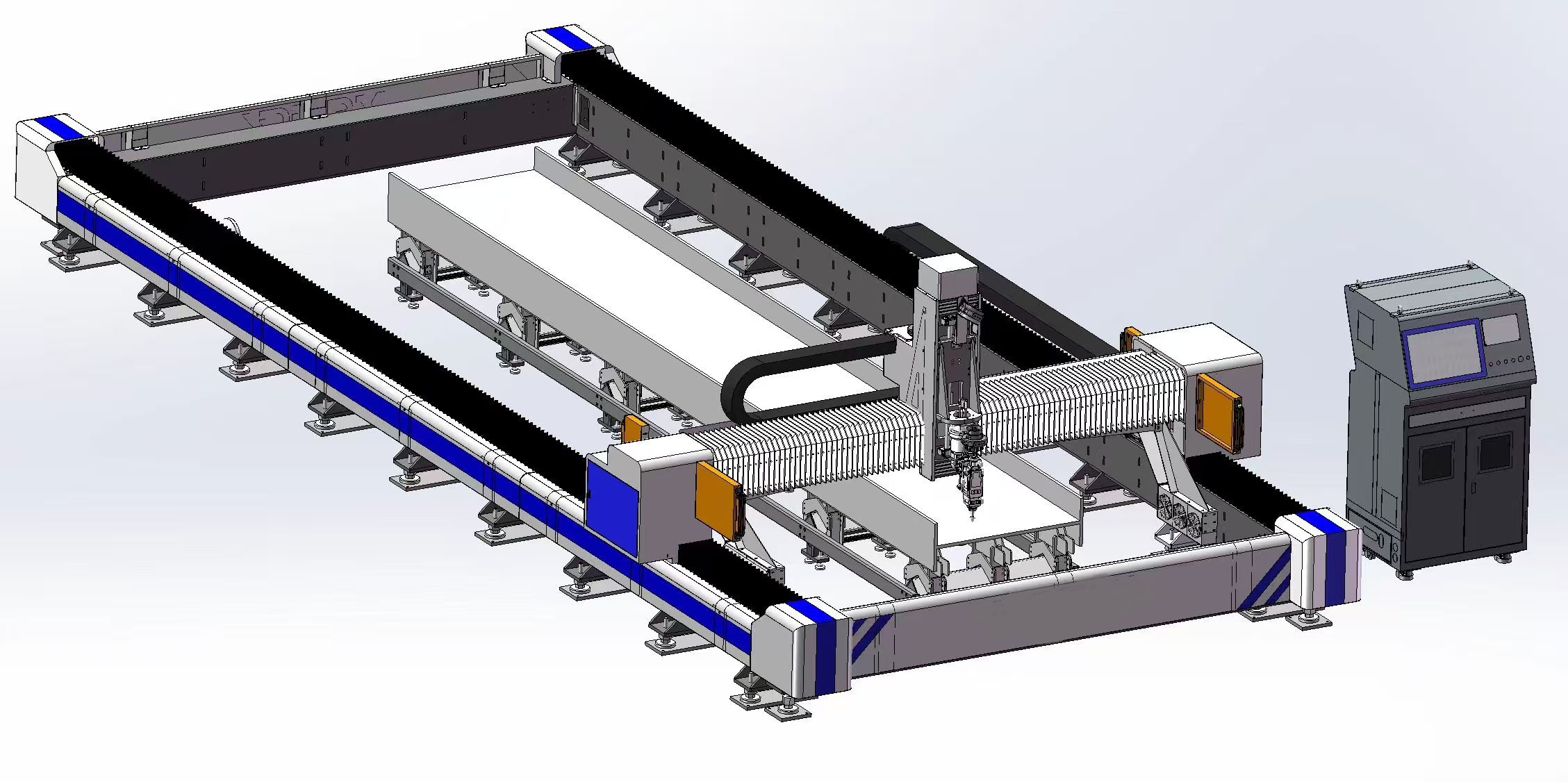
Tube and Sheet Laser Cutting Machine (combo) -- one of our platforms covering round and square tube in the same cutting envelope.
Round, Square, Rectangular, and Oval: What Actually Differs
Round Tube
The most common tube shape by far -- round tube cutting is the baseline case our dual self-centering chucks are built around, with rotation speed and centering accuracy both tuned for cylindrical stock specifically.
Square Tube
Square tube needs the chuck to hold and rotate a non-round profile without slipping or marking the surface, and the control system needs to track corner transitions accurately during a cut rather than assuming constant radius the way it can on round stock.
Rectangular Tube
Rectangular tube adds an extra wrinkle beyond square: two different wall widths on the same cross-section, which means cutting-parameter and speed adjustments happen mid-rotation as the beam transitions between the long and short faces.
Oval Tube
Oval tube is the least common of the four but shows up regularly in architectural and furniture work where a rounded aesthetic with directional strength matters -- it demands the most precise real-time profile tracking of the shapes on this page, since the radius is constantly changing around the full rotation rather than settling into flat faces or a constant round radius.
How Our Machines Handle Shape Variety
Our Tube CNC Fiber Laser Cutting Machine covers round, square, rectangular, D-shaped, oval, polygonal cross-sections on one platform, using intelligent kerf and distortion compensation with real-time capacitive sensing to hold accuracy across shape changes rather than needing a hardware reconfiguration between round and non-round jobs. Self-centering dual pneumatic chucks with automatic pressure monitoring regardless of which profile is loaded.
Does Shape Affect Price?
Indirectly, yes -- not because round tube is a different product line, but because non-round shapes generally take somewhat more programming time per new part design and, on some jobs, slightly reduced cutting speed through corner transitions compared to round stock at the same wall thickness. None of this changes which machine you'd buy; it affects cycle time and, indirectly, cost per part once you're in production. We don't publish a shape-based price premium since it depends on your specific part geometry -- ask us directly for a cycle-time estimate on your actual parts.
Intersection and Miter Cuts Across Shapes
Cuts complex intersection joints ready for welding without secondary grinding -- this matters across all four shapes covered on this page, but shows up most visibly on square and rectangular tube used in railing and frame work, where a clean intersection cut is the difference between a weld-ready joint and one that needs manual grinding and fit-up before it's ready to join.
Choosing the Right Shape for Your Application
- Round tube: the default choice for railing, structural framing, and most general fabrication where uniform strength in all directions matters.
- Square/rectangular tube: preferred where flat mounting faces matter -- furniture frames, brackets, and anything that needs a flush surface to bolt or weld against.
- Oval tube: chosen mainly for appearance and directional strength in architectural and furniture applications, less common in pure structural work.
Two Perspectives Worth Considering
consistency across a long run is what actually gets noticed -- if part 200 needs the same touch-up as part 2, that's a parameter or gas-purity problem worth flagging before it becomes a full-shift's worth of rework on a tube shapes readers order.
heat-affected zone width and edge microstructure are real engineering concerns on tube shapes readers parts that get welded, heat-treated, or stressed after cutting -- a narrower HAZ from a well-tuned fiber laser cut gives more margin in downstream processing than a wider one from an under-optimized setup.
Distortion Compensation Across Shapes
Intelligent kerf and distortion compensation with real-time capacitive sensing -- this matters more on non-round shapes, where a slight bar bow or twist shows up as an inconsistent cut line across a flat face in a way it's less visible on a round profile. Real-time capacitive sensing catches this drift during the cut itself rather than relying on the bar being perfectly straight going in, which is rarely true of commercial tube stock at any shape.
Materials by Shape: Any Real Differences?
The material-cutting physics (assist gas, reflectivity, HAZ) don't change based on tube shape -- a stainless steel square tube cuts on the same nitrogen-assist principles as stainless round tube. What does change slightly is edge visibility: a flat face on square or rectangular tube shows any inconsistency in cut quality more obviously than a round tube's continuously curved surface does, which is worth keeping in mind on cosmetic applications like railing or visible furniture frames.
Programming Time by Shape
Round tube parts with simple end cuts program fastest, since there's no corner-transition logic to account for. Square and rectangular tube add moderate programming complexity for corner tracking. Oval tube, with its continuously variable radius, generally takes the most programming time per new part design among the four -- though once a part is programmed and saved, repeat production runs at the same speed as any other saved job regardless of shape.
None of the four shapes above are a special-order product on our platforms -- they're all standard capability on the same chuck and control system, which is why the honest buying advice is to focus on your finished part's requirements first and treat shape support as a given rather than a differentiator between our machine lines.
Polygonal and D-Shaped Tube: The Less Common Cases
Beyond the four shapes most buyers ask about, our tube platforms also cover D-shaped and polygonal cross-sections -- less common, but not rare, in specialized architectural and custom fabrication work. These shapes generally demand the same real-time profile tracking as oval tube, since neither has the constant-radius or flat-face simplicity of round or square stock. If your application uses one of these less common profiles, treat it the same way we'd recommend for any shape: ask for a sample cut before committing to a full production order.
Whichever shape ends up right for your product, ask any supplier -- ours included -- for a cut sample in that specific profile and material before finalizing an order, since a generic capability claim on a spec sheet doesn't always reflect real-world cut quality on the shape and thickness you actually run.
Shape and Downstream Assembly
The shape decision often isn't really about the cutting machine at all -- it's driven by what the finished assembly needs. Square and rectangular tube get chosen for flush mounting faces that make bolting or welding straightforward; round tube gets chosen for uniform strength and aesthetic simplicity; oval gets chosen almost entirely for appearance and directional strength in visible architectural work. Whichever shape your finished product calls for, the cutting machine needs to keep up with that decision rather than constraining it -- which is the practical reason to confirm shape-handling capability before finalizing a design around a specific tube profile.
Common Concerns Before Ordering
Buyers sometimes assume a machine advertised for "round tube" simply can't handle square or rectangular stock at all, when more often the real question is whether it handles non-round shapes as well as round -- ask directly for sample parts in the specific shape and material you run, not just a general capability claim.

Tube CNC Fiber Laser Cutting Machine -- referenced above.
Frequently Asked Questions
Can the same machine cut round and square tube without a hardware change?
Yes -- our tube platforms handle round, square, rectangular, D-shaped, oval, and polygonal cross-sections on the same chuck and motion system.
Is square tube harder to cut than round tube?
Not harder exactly, but different -- the chuck and control system need to track corner transitions and hold a non-round profile without slipping, versus round tube's constant-radius simplicity.
Does cutting oval tube cost more than round tube?
Not as a different product, but oval profiles can mean somewhat more programming time and adjusted cutting speed through the continuously changing radius -- ask us for a cycle-time estimate on your specific parts.
What shape is most common for railing and handrail work?
Round tube is most common for railing, though square and rectangular show up regularly where a flush mounting face is needed.
Can your machine cut a custom or unusual tube profile?
Our tube platforms cover round, square, rectangular, D-shaped, oval, and polygonal shapes -- send your specific profile and we'll confirm fit.
Does intersection cutting quality vary by tube shape?
The underlying capability is the same across shapes, but clean intersection cuts matter most visibly on square and rectangular tube used in railing and frame work, where a weld-ready joint saves real fit-up time.
Does material choice interact with tube shape at all?
The cutting physics stay the same regardless of shape, but flat faces on square or rectangular tube show any edge-quality inconsistency more visibly than round tube's curved surface does -- worth noting for cosmetic applications.
Which shape takes the longest to program for a new part?
Oval tube generally takes the most programming time per new design given its continuously changing radius; once programmed, repeat runs cut at normal speed regardless of shape.
Can distortion in the raw tube stock affect cut quality?
Yes, on any shape -- real-time capacitive distortion sensing compensates for bar bow or twist during the cut rather than assuming perfectly straight incoming stock, which commercial tube rarely is.
Do you cut D-shaped or polygonal tube?
Yes -- our tube platforms cover D-shaped and polygonal cross-sections in addition to round, square, rectangular, and oval, though these are less common requests worth confirming with a sample cut.
Should the tube shape be chosen based on the cutting machine or the finished assembly?
The finished assembly should drive shape choice -- the cutting machine needs to keep up with that decision, and it's worth confirming shape-handling capability before finalizing a design around a specific profile.